Are Google Review Cards Worth It for Your Workflow?
Key facts
- Method
- Opens a business review page; does not publish a review
- Choice
- Customer chooses whether to post and their own rating
- Ordering
- Check the selected product options and full terms
Google review cards can be worth buying when reusable hardware fits an in-person customer handoff and removes the need to find a link each time. They may not be worth buying if a tested paper QR prompt or direct message already suits the interaction. No extra review count, revenue or ranking is promised.
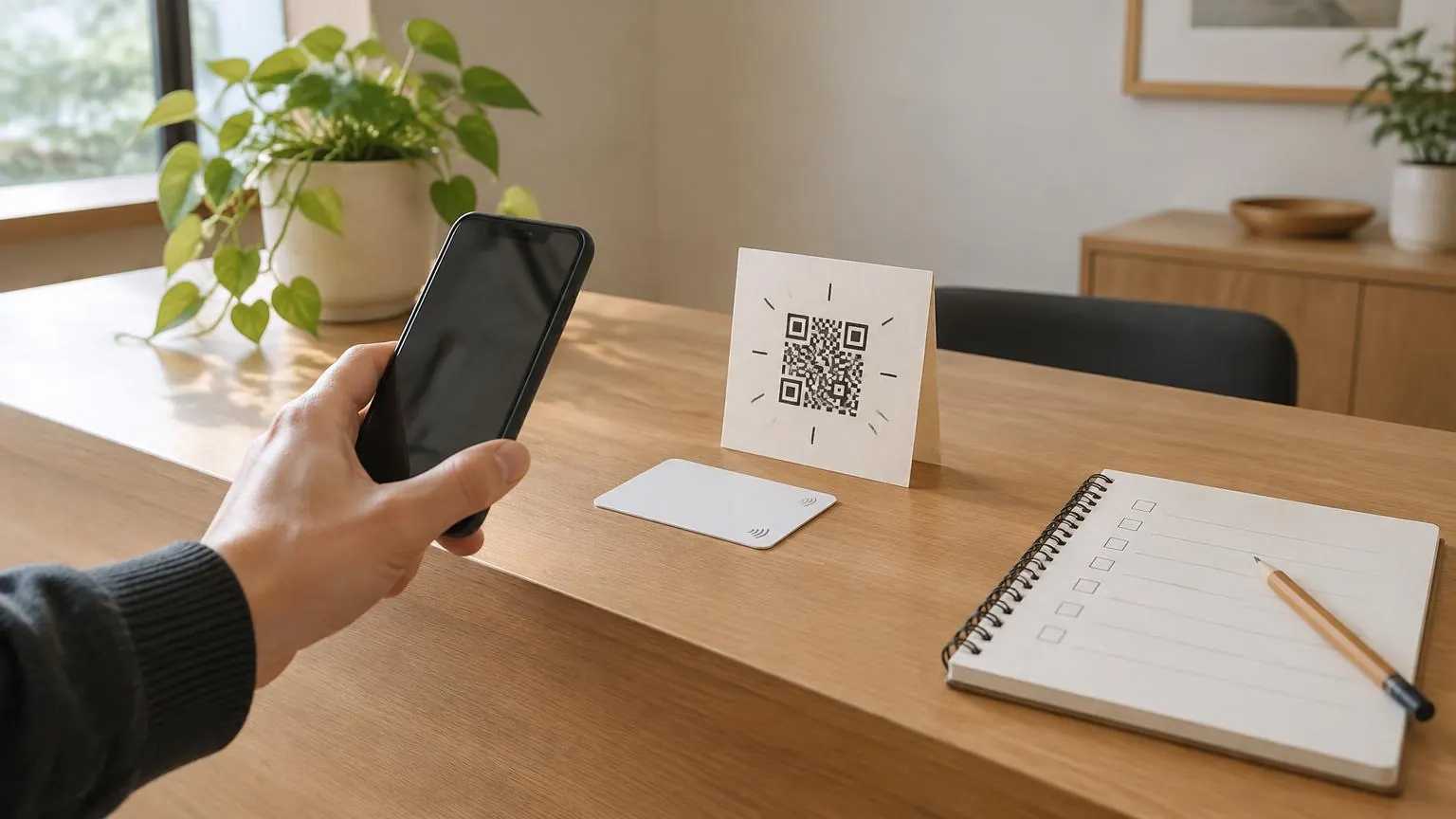
Google review cards can be worth buying when reusable hardware fits an in-person customer handoff and removes the need to find a link each time. They may not be worth buying if a tested paper QR prompt or direct message already suits the interaction. No extra review count, revenue or ranking is promised.
Define the job the card would do
A useful purchase decision starts with a specific inconvenience. Perhaps staff cannot find the correct review link during a checkout conversation, or a paper prompt is repeatedly misplaced. A card addresses the handoff or physical format, not the whole customer experience. If you cannot identify who will use it, where it will be kept and how a customer will encounter it, buying hardware may simply add another unused object. Fix the destination and routine before choosing a paid format.
| Situation | Possible fit | Reason to wait or choose differently |
|---|---|---|
| Staff hand a prompt over repeatedly | Reusable NFC card; QR option if wanted | A paper prompt may already work without inconvenience |
| One fixed counter | Stand or existing paper QR display | A handheld card may not suit a fixed display |
| Customer visits on the move | Card or keychain | The team may not have a reliable place to carry it |
| Mostly remote service | Direct review link in an appropriate message | Physical hardware may not fit the interaction |
| Untested business destination | Do not choose hardware yet | Confirm the correct review form first |
When a paid card answers a real need
Reusable handoff is the clearest fit for a card. A staff member can keep it at reception and offer it after an appointment, then put it back for the next interaction. The Simple option provides NFC; QR-equipped options also give a camera-scan route. You can buy the physical feature you want without claiming it will change the customer’s opinion. This store’s card is preprogrammed to a supplied review destination, and posting still requires the customer’s own Google account.
When free or simpler is enough
If you already have a tested printed QR prompt, suitable printing supplies and a stable review destination, you may not need a purchase. For a remote interaction, an appropriate direct link may fit better than a card that never reaches the customer. Google allows sharing a review link or QR code. The question is whether the existing method is clear and available at the right place, not whether it looks like a branded product. Do not replace a working low-cost method merely to follow a trend.
Do not assume a card solves phone compatibility or internet access. NFC requires a compatible phone with the function available. QR uses a camera scan where a code is included. Opening the online review page still needs a connection and publishing requires sign-in. If customers prefer to leave later, a physical tap cannot guarantee they will finish immediately. Respect that choice rather than hovering over a customer or asking to control their device.
Costs and maintenance are part of suitability
Compare the chosen option, delivery fee and any optional link-management purchase. An Editable URL is a separate paid lifetime add-on, included for reseller members; it is not a prerequisite for the originally programmed link to open. Also consider who will check the destination after business-profile changes and keep the physical card available. A card left in a drawer does not perform a handoff. These are practical checks, not a return-on-investment formula or an estimate of additional revenue.
Use a stopping rule, not a review target
- Do not order until the correct business link opens on a phone.
- Choose a keeper and a place for the item before buying.
- Keep a paper or direct-link alternative where that is already adequate.
- Check whether you need NFC only or the printed QR option too.
- Stop and ask for clarification if an on-request feature or return term is unclear.
Your goal can be a clearer invitation available to every customer. It should not be an increased rating promised by a seller, a required score printed on the card, or a review count tied to staff rewards. Google prohibits incentives and selective solicitation of positive reviews. A neutral request works within those limits whether it is printed, spoken or presented through NFC. Choose the least complicated format that your team can actually use and keep accurate.
Try the handoff before choosing paid hardware
Use your tested review destination in the interaction you already have. For a fixed counter, a plain QR prompt can reveal whether a phone can reach the display and whether the customer can see which business it represents. For a remote appointment, try the direct-link route your normal communication process supports. The test is about access and suitability, not an experiment promising a review conversion rate. Do not withhold an adequate free route simply to make a card purchase seem necessary.
Notice physical obstacles: a display behind equipment, a shared card without a storage place or a portable prompt that nobody carries. Describe the inconvenience precisely before comparing products. A stand may address a fixed-placement problem; a card may address repeated handheld presentation; a keychain may fit existing mobile storage. If the inconvenience can be solved by relocating the paper display, do that first. There is no evidence here that purchasing a particular material or branded object changes how a customer feels about the business.
Worked decision: an appointment business versus a remote service
An appointment business has a reception conversation after service, a place for a reusable card and staff willing to keep it available. A card can fit that defined handoff. If the team wants a camera option, select a QR-equipped variation rather than the Simple card. A named variant can help identify the intended business at a shared reception. Before paying, check the business link and selected total. The reason to buy is the reusable form and included methods, not a projected number of reviews.
A remote service may have no occasion to present a physical object. A suitable direct review link can reach the customer through the existing follow-up process without a card. Ordering hardware for a hypothetical future meeting may be unnecessary. If the business later starts in-person visits, reconsider the actual workflow then. Neither example establishes a universal industry rule: some appointment businesses can keep using paper, and some remote operators also run physical reception. Fit depends on the interaction you can identify, not a broad label attached to the company.
Worked decision: a busy counter with limited room
A counter with little free surface may not suit an additional stand. Check whether an existing holder, reachable fixed surface or appropriate sticker placement would meet the need. Do not obstruct payment equipment or require a customer to reach into the staff area. A handheld card stored behind the desk may be simpler if a staff member is already speaking with the customer. Alternatively, moving a current paper prompt can be enough. Compare the options by actual access rather than by a claim that visibility guarantees reviews.
Be honest about maintenance. A display that gets covered by stock needs a keeper, regardless of whether it cost money. A card passed between shifts needs a home. A portable keychain needs a destination record when staff work for several branches. Buying more formats does not remove these responsibilities. If nobody can take ownership of the setup, postpone the order and resolve that practical issue first. The least complicated adequate arrangement is often easier to inspect than an assortment whose purpose has not been defined.
Decide what would make you keep, change or stop
After introducing a prompt, review whether the intended link opens, staff can access the item and the format still suits the space. Keep it when those practical needs are met. Change its location or replace damaged print when that is the actual problem. Stop using it if it points to the wrong profile or its request becomes misleading. A customer declining to review is not a hardware defect, and a quiet period does not prove that a different product would have generated a better outcome.
Do not turn an optional purchase into pressure on customers. They can choose to leave later, use a different route or not post. A product cannot overcome lack of internet or create the customer’s Google account for them. If you cannot establish a suitable use case without relying on extra revenue, rankings or review counts, the guide provides no evidence for that calculation. Keep the existing adequate method while you clarify your requirement. Worthwhile here means a purchase that serves a real, maintainable handoff at a known cost—not a guaranteed financial return.
Related buying decisions
For the wider topic, use the nfc products guides. Continue with Printable Google Review Card: Try Before Buying and Google Review Cards: A Small-Business Starter Kit. Check the selected product’s actual options and compare all six review products before ordering.
❓ Frequently asked questions
Do cards guarantee more reviews?
No. They open a destination; the customer decides whether to post and what to write. No count or ranking outcome is promised.
When might buying a card be unnecessary?
When a tested paper QR prompt or appropriate direct link already fits the interaction and there is no practical problem to solve.
Is NFC needed for a remote business?
Not necessarily. Physical hardware may not reach the customer; a suitable direct-link request can be more appropriate.
Do all customers have to use the card immediately?
No. The customer can decline or choose to review later. Do not turn the prompt into pressure.
Is the link add-on required to use the original link?
No. The originally programmed destination can open without it. Editable link management is a separate optional purchase.
Can I calculate a guaranteed payback period?
No. The project provides product prices and features, not reliable extra-review, revenue or ranking outcomes to support a payback promise.
Sources
Related articles
Printable Google Review Card: Try Before Buying
A printable Google review QR prompt can be enough when a camera scan fits your customer interaction and you already have suitable printing supplies. Try the real destination at its final printed size before buying NFC hardware. Keep the paper version if it works for your placement; a paid card is not automatically necessary.
Google Review Cards: A Small-Business Starter Kit
A small business can start with one tested review destination and a format that fits a real customer conversation. Choose a handheld card for appointments, a stand for a fixed counter, or a portable keychain for visits. You do not need every product, reseller membership or a promised review-growth target to begin.
Further reading and buying information
- NFC Google Review Cards
- NFC Google Review Keychains
- NFC Review Wristbands
- Google review setup and business guides
- Getting Google reviews
- Google review links and QR codes
- Review rules and compliance
- Managing and responding to reviews
- Industry playbooks
- Google Review Stand Placement: 5 Spots to Try
- Fake Google Reviews: How to Spot, Report and Protect Yourself
- How Google Review Cards Work (Step-by-Step Breakdown)
- How to Train Your Staff to Ask for Google Reviews
- Review Cards vs Review Stands: Which Should Your Business Use?
- Why NFC Review Cards Are the Future of Review Collection
- Google Review Strategy for Beauty Salons & Barbers
- Review Growth Strategies for Cleaning Companies
- How Restaurants Can Increase Google Reviews
- Are Review Cards Allowed by Google?
- How Many Google Reviews Do You Need to Rank Higher?
- Do NFC Review Cards Improve Local SEO?
- How Google Reviews Influence Map Pack Rankings
- How to Turn Negative Google Reviews Into Conversions
- Google Review Conversion Benchmarks: Measure Your Own Rate
- Bulk Google Review Cards for Team Orders
- Can Employees Leave Google Reviews for Your Business?
- Google Review Cards for Contractors: Field Kit
- Google Review QR Code: How to Make, Print and Test One
- Google Review Request Templates for Text, Email and WhatsApp
- Google Reviews in AI Overviews and AI Mode: How AI Search Uses Your Reviews
- Google Reviews for Photographers and Wedding Suppliers: How to Get Them
- How Long Do NFC Review Cards Last? Care and Links
- How Many 5-Star Reviews Do You Need to Raise Your Google Rating?
- How to Find Your Google Review Link (and Share It Properly)
- How to Program an NFC Tag With Your Google Review Link
- How to Respond to Google Reviews (With Examples)
- Review Us on Google Sign Ideas: Wording, Formats and Placement
- Review Velocity Explained: Why a Steady Flow of Google Reviews Beats a Burst
- Author profile: arun babu veeranki
- Compare Google review products for your business
- Press information about Google Review Cards