How Google Reviews Influence Map Pack Rankings in the United States
The Google Map Pack is where American consumers make local buying decisions. Here's exactly how reviews decide which three US businesses show up — and how to make yours one of them.
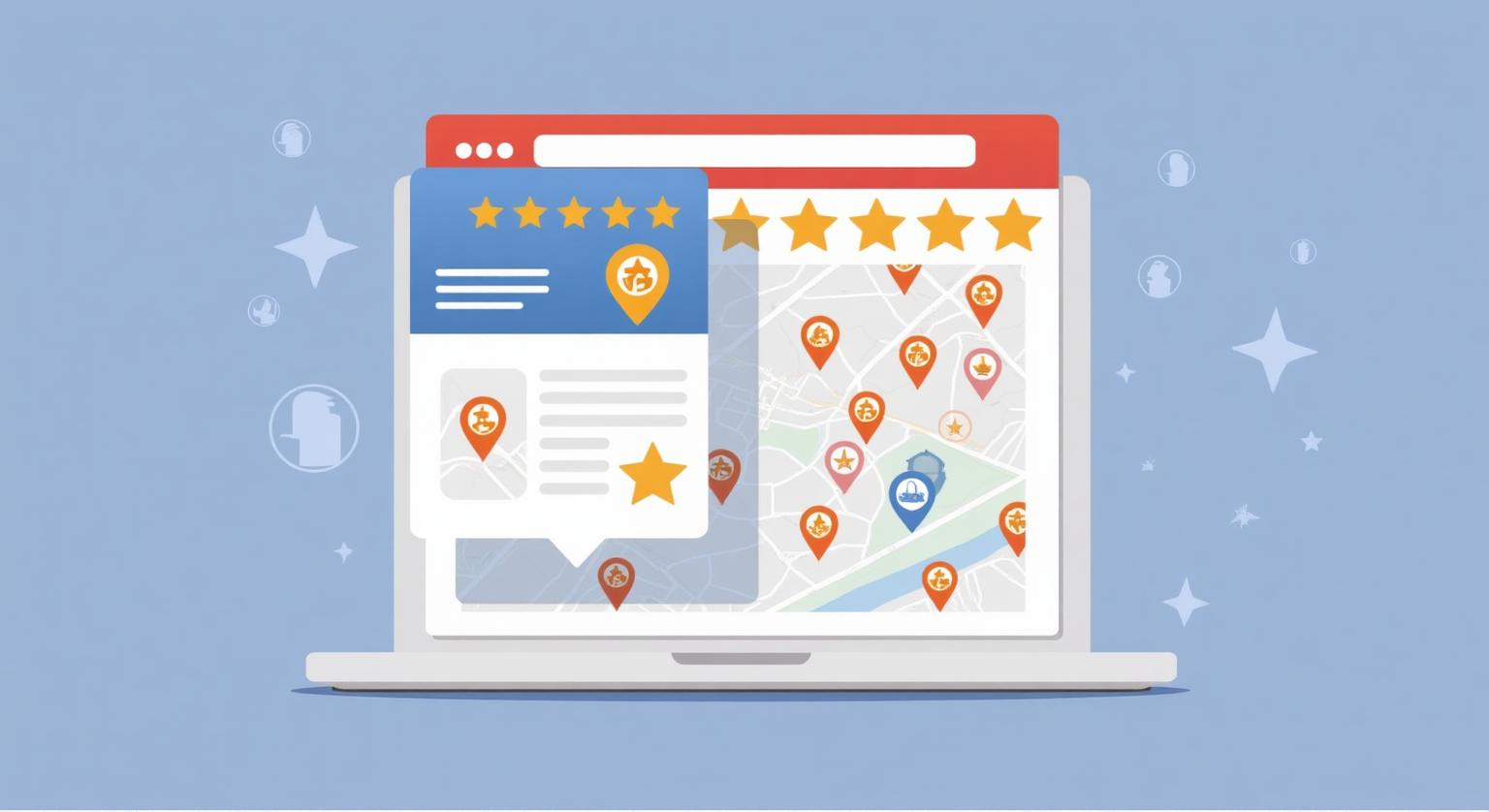
Open Google on your phone and search for "plumber near me" in Houston, "best dentist in Phoenix," or "HVAC repair Chicago." Before you see a single website link, three local businesses appear in a box with a map, star ratings, review counts, and click-to-call buttons. That box is the Google Map Pack, and it captures a large share of local search clicks in the United States. For American small businesses — from one-truck contractors to multi-location medical practices — the Map Pack is the difference between a phone that rings and a phone that doesn't. Google Reviews are one of the most controllable signals that decides who gets in.
What the Map Pack Looks Like to American Consumers
US searchers have been trained by a decade of mobile Google use to trust the Map Pack as a shortcut. They don't read ten blue links; they tap the top three. The top position tends to capture the most clicks, the second gets meaningfully less, and the third less still, with everyone else fighting over what's left. In high-intent categories — emergency plumbing, personal injury attorneys, dentists accepting new patients, same-day appliance repair — those clicks convert into calls readily because the searcher is already ready to buy.
This is why Map Pack rankings are so economically valuable in the US. A roofing company that moves up a few positions can add meaningful annual revenue without spending another dollar on ads. A med-spa that holds the first spot for "Botox near me" books consultations at a cost per lead that can beat paid social or search ads. Reviews are one of the levers that makes that move possible.
Google's Three Local Ranking Factors — US Context
Google's local algorithm evaluates every US business on relevance, distance, and prominence. Reviews influence all three, but they weigh most heavily on prominence — the factor most American small businesses can actively improve.
- Relevance: reviews tell Google what you actually do. A customer who writes "best transmission shop in San Diego" helps Google associate your listing with that query.
- Distance: you can't move your address, but a strong, active review profile can make Google more willing to show you to searchers farther away.
- Prominence: this is where reviews, citations, press mentions, and brand search volume live. It's the factor that lets a newer boutique dental studio compete with a long-established practice.
Try this in an incognito window: search your primary service + your city. Open the top three Map Pack listings and note their review count, average star rating, and how recently they've earned new reviews. That gap is your roadmap.
The US Review Signals That Move Map Pack Rankings
Not all reviews are weighted equally. Google works to separate authentic, useful review signals from manipulated noise. In competitive US markets, these are the signals that matter most:
- Total review count relative to competitors in the same metro or zip code — not absolute numbers, but comparative strength
- Average star rating, with a high rating expected as the norm in most competitive US categories
- Review velocity: how many new reviews you earn on an ongoing basis, not just over the business's lifetime
- Review recency: older reviews carry less weight than recent ones
- Keyword relevance inside review text — natural mentions of services, neighborhoods, and search phrases
- Owner response rate and speed — replying to reviews promptly is a measurable signal
- Review diversity across platforms — Google is primary, but Yelp, BBB, Facebook, and industry sites reinforce prominence
- Photo uploads in reviews — user-generated images can increase trust and time spent on a listing
Why Review Velocity Beats Total Volume in the US
American small business owners often obsess over total review count. They look at a competitor with hundreds of reviews and feel behind. But Google's local algorithm cares more about momentum than history. A US business with a large historical review count but nothing recent can lose Map Pack position to a smaller competitor with a steady stream of fresh reviews.
Recency is a freshness signal. Google interprets a steady stream of new reviews as proof that the business is active, popular, and currently serving customers well. In fast-moving US markets — where businesses open and close constantly — stale review profiles can signal decline, even if nothing else about the business has changed.
The 'Near Me' Economy and American Search Behavior
US mobile searches containing "near me" have grown steadily for years. "Coffee near me," "urgent care near me," "mechanic open now near me" — these queries bypass traditional SEO and go straight to the Map Pack. American consumers expect instant answers with distance, hours, and a one-tap call button. They don't want to browse; they want to decide quickly.
Reviews are the social proof that closes that decision. A strong rating with recent owner replies tends to beat a mediocre one even if the mediocre business is closer. American consumers read review snippets for risk signals: "came same day," "fixed it fast," "super friendly front desk," "no upsell." Those phrases show up in the Map Pack and directly influence who gets the call.
Map Pack Killers That Sink US Businesses
- A stalled review profile with no new reviews for an extended stretch
- A star rating that's noticeably below competitors in categories like dentists, lawyers, plumbers, realtors, and med-spas
- Generic or missing owner responses — copy-paste replies signal low engagement
- A cluster of reviews posted in one suspicious burst, which can look purchased to Google's spam models
- Inconsistent NAP (name, address, phone) across Yelp, BBB, Facebook, Apple Maps, and directories
- Negative reviews left unanswered, especially ones mentioning specific service failures
- Review gating or filtering customers, which Google's policies explicitly prohibit
A Map Pack Action Plan
- Claim and fully optimize your Google Business Profile with US hours, services, photos, and attributes
- Deploy NFC Google Review Cards at every customer touchpoint — counter, checkout, service vehicle, closing folder
- Train staff on a one-sentence ask and track review velocity over time
- Reply to every new review promptly, using the customer's name and mentioning your city or service naturally
- Audit competitors regularly, refresh photos, update posts, and keep asking for reviews consistently
Businesses that follow this plan tend to see Map Pack movement over time. The businesses that don't move usually skipped the consistency part — they asked for reviews once, not every week.
The Bottom Line for American Business Owners
The Map Pack is not a mystery, and it's not reserved for national chains with enterprise SEO budgets. It's a ranking system that rewards relevance, proximity, and prominence — and reviews are one of the most direct paths to prominence for American small businesses. Collect them ethically, respond to them quickly, and keep the velocity steady.
❓ Frequently Asked Questions
How many Google reviews do I need to rank in the US Map Pack?
There's no fixed number. Businesses that consistently rank well in competitive US cities tend to have a solid review count with a high star rating and steady monthly velocity. In smaller markets, fewer well-maintained reviews can be enough.
How quickly do new Google reviews impact Map Pack rankings?
There's no guaranteed timeline. Sustained review velocity, combined with an otherwise optimized and consistent Google Business Profile, tends to produce movement over time.
Do Yelp reviews influence Google's Map Pack in the United States?
Indirectly, yes. Google's prominence factor considers off-platform trust signals. Consistent activity and positive sentiment on Yelp, BBB, Facebook, and industry-specific sites reinforce your business's overall prominence even though only Google Reviews appear on your profile.
Can a small US business outrank a national chain in the Map Pack?
Yes. Small US businesses regularly outrank franchises by maintaining higher review velocity, better star ratings, faster owner response times, and stronger local relevance signals like neighborhood mentions in reviews.
What star rating do I need to compete in the US Map Pack?
There's no universal cutoff, but in competitive US categories a noticeably below-average rating will make it hard to break into the top three, while a strong rating with steady velocity is difficult to displace.
Why did my Map Pack ranking drop even though my total review count went up?
This usually means your review velocity slowed down or your competitors accelerated. Google weights recency heavily. A spike of old reviews won't help if you have few new ones. Focus on earning consistent reviews every week.
Should I respond to every Google review to improve Map Pack rankings?
Yes. Aim to reply to as many reviews as possible, promptly. Owner responses are a confirmed engagement signal, and future customers read them before calling. Personalized replies that mention your service or city also reinforce local relevance.
Are purchased Google reviews worth it for Map Pack rankings?
No. Google actively works to detect fake and purchased reviews. Purchased reviews can trigger profile suspension, ranking penalties, and loss of the ability to appear in the Map Pack at all. Ethical review collection is the only sustainable strategy.
Related Guides & Tools
Hand-picked next reads for US small businesses growing their Google reviews.
Explore Our Products
Google Review Card
NFC tap cards that take customers straight to your Google review page.
Google Review Stand
Countertop stands perfect for restaurants, salons, and reception desks.
Google Review Plaque
Wall-mounted plaques that collect reviews in high-traffic areas.
Google Review Stickers
Peel-and-stick NFC stickers for windows, doors, and counters.
Google Review Keychains
Portable keychains your team can carry to collect reviews anywhere.
NFC Wristband
Wearable NFC wristbands for events, trade shows, and on-the-go reviews.
Ready to Get More Google Reviews?
Start collecting reviews instantly with NFC Google Review Cards.
Shop NowRelated Articles
How Google Reviews Impact Local SEO in 2026
Reviews aren't just 'nice to have' anymore. They're one of the strongest ranking signals in Google's entire local search algorithm.
How Many Google Reviews Do You Need to Rank Higher?
There's no magic number — but there are clear benchmarks by industry and competition level. Here's where you need to be.