Printable Google Review Card: Try Before Buying
Key facts
- Method
- Opens a business review page; does not publish a review
- Choice
- Customer chooses whether to post and their own rating
- Ordering
- Check the selected product options and full terms
A printable Google review QR prompt can be enough when a camera scan fits your customer interaction and you already have suitable printing supplies. Try the real destination at its final printed size before buying NFC hardware. Keep the paper version if it works for your placement; a paid card is not automatically necessary.
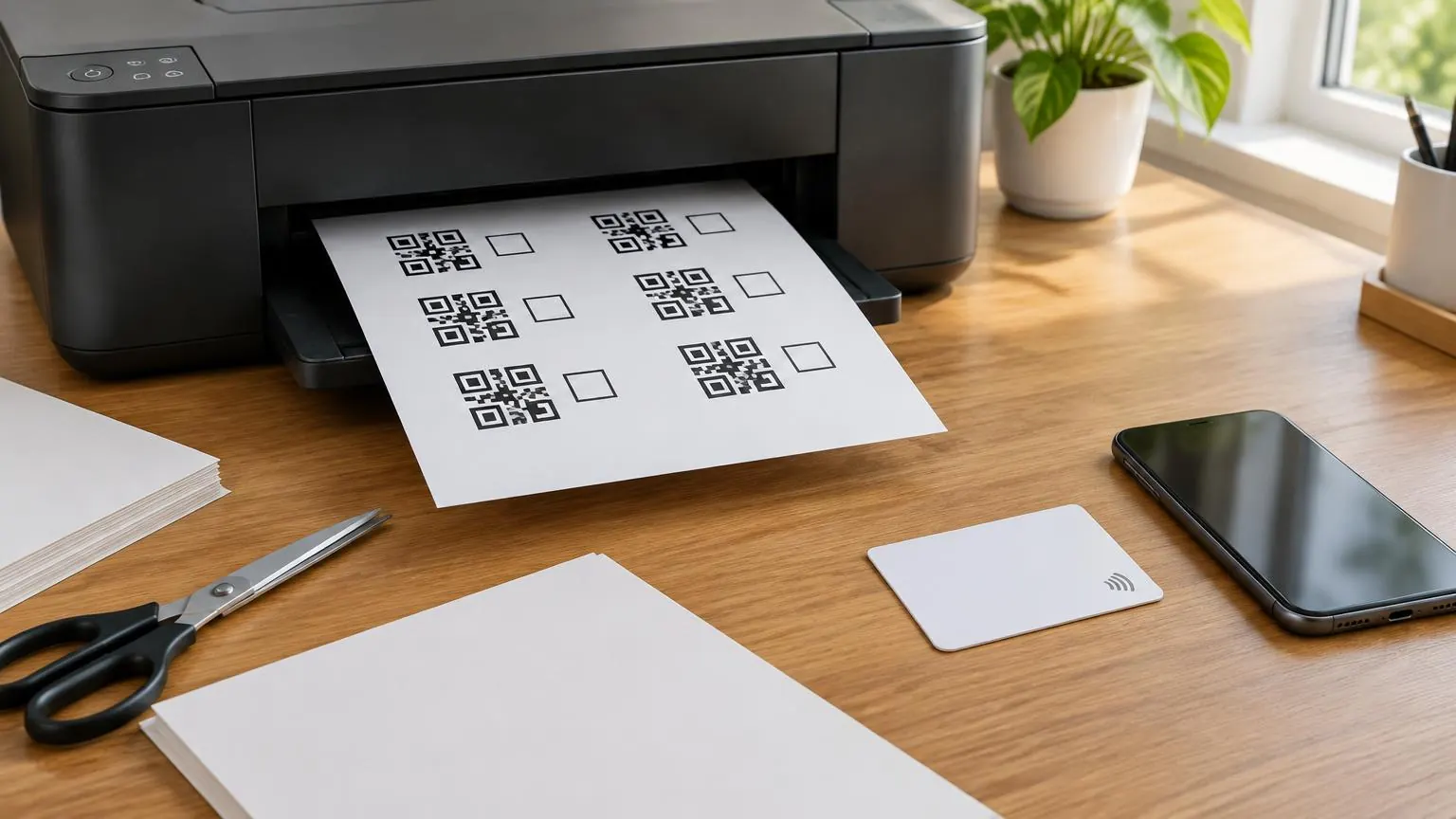
A printable Google review QR prompt can be enough when a camera scan fits your customer interaction and you already have suitable printing supplies. Try the real destination at its final printed size before buying NFC hardware. Keep the paper version if it works for your placement; a paid card is not automatically necessary.
A trial decision, not another conversion comparison
Existing articles already compare NFC with printed QR cards. This guide takes a narrower angle: testing a paper prompt before spending on a reusable product. It does not estimate which method gets more reviews or treat a purchase as the trial’s required conclusion. The useful outcome is knowing whether a clear printed link can perform the handoff in your actual space. You may decide to keep it, revise the print or buy a different physical format.
| Method | What you can test | Reason to keep or change |
|---|---|---|
| Paper QR prompt | Correct destination and camera access at real print size | Keep if the fixed placement works |
| Direct review link | The page opens from an appropriate digital message | Keep for interactions where no object is needed |
| NFC-only card | Tap on compatible phones; no printed scan method | Compare if repeated handheld use is the missing feature |
| NFC + QR card | Reusable handoff with tap and camera methods | Compare if you need both included features |
| Counter stand | Visible fixed display and phone access | Compare if paper placement is physically unsuitable |
Build the paper version around a tested destination
Use the correct business review link, not a general search page or another branch’s listing. Open it on a phone and verify the business name. Google provides guidance on sharing a review link or QR code from Business Profile. If you use another QR tool, make sure the result points where you intend and understand whether it introduces an intermediary service. This article does not supply a downloadable template or promise that every third-party generator has free or permanent hosting.
Printing is not costless in every situation. Paper, ink and access to a printer may cost money, even if you already own them. A free trial here means using an existing review link and available supplies without buying this store’s hardware, not a claim that printing, design work or an external dynamic-QR service is universally free. Avoid building your comparison around an imaginary zero total for resources you still need to buy.
Test the finished print, not the screen preview
- Print at the size you will actually display.
- Keep the QR pattern clear and leave its border unobstructed.
- Try the camera at the distance and angle a customer can reach.
- Check it under the lighting at the counter or reception point.
- Confirm the correct review form opens, rather than just any Google page.
- Use a neutral request without a reward or a required rating.
A phone should have a clear view of the pattern without the customer moving obstacles or leaning across equipment. If glare, print damage or placement prevents a scan, try a better paper display first. That problem does not prove NFC would produce more completed reviews. If the paper is repeatedly moved or damaged, a reusable physical format may address the placement problem. Keep the question about access and hardware separate from the customer’s decision to publish.
What buying NFC changes
An NFC-equipped card adds a tap method for a compatible phone. Here the Simple card is NFC-only, and QR-equipped options provide a printed camera-scan route as well. A stand changes the fixed display, while a keychain changes how the item is carried. None of these turns the online page into an offline review tool. Loading Google still requires a connection and posting requires the customer’s account. Choose a product for the specific physical or connection feature the paper trial lacks.
Keep a working free route without apologising for it
If a plain QR prompt remains readable, opens the right location and fits how you speak to customers, you can keep it. You do not owe a seller a hardware purchase. A direct link can also remain suitable for remote interactions. For either method, maintain the destination and avoid incentives or selective requests. A static printed code cannot be changed on the paper after printing; a link-management service is a separate mechanism with its own terms. Do not assume a free paper trial automatically includes editable hosting.
Define a trial you can evaluate without a review target
Write down the physical question you want the paper prompt to answer. It might be whether a customer can reach the code at reception, whether the display survives the normal counter routine or whether a portable card would be easier to keep available. Do not define success as a particular number of published reviews. Customer choice, sign-in and connectivity remain outside the printed pattern’s specification. A functional trial can establish that a destination opens at the intended placement without making a marketing promise.
Use your actual final print rather than an enlarged image on a laptop. Try it under the normal lighting and with the display positioned as customers would encounter it. Check whether stock, a holder edge or glare obscures the pattern. If the scan is difficult, adjust those conditions first. A poor paper placement is not evidence that all QR prompts are inferior or that NFC would change the number of reviews. Keep a short note of the obstacle and the adjustment so the comparison remains about an observable requirement.
Worked trial: a stable shop counter
A shop already has a clear holder beside the checkout conversation. Print a tested review QR, use neutral wording and place it where a phone has a clear view. Confirm the business name when the page opens. If the paper stays readable and staff can point to it without interrupting payment, it may meet the requirement. The store does not need to purchase an NFC card simply because the prompt was made with existing supplies. The decision can be to keep the paper version and maintain its destination.
Now suppose the holder is regularly moved or covered by merchandise. Give it a designated place and test again before buying. If a fixed stand would genuinely address the physical issue, compare its selected size and connection methods. Do not assume the lowest stand option includes every pictured feature. If NFC is the missing requirement rather than stable display, compare that explicitly. This hypothetical example separates placement, hardware and connection method instead of treating a paid object as the unavoidable conclusion of the trial.
Worked trial: a remote service and a mobile visit
For a remote service, a paper prompt may never reach the customer. The tested direct review link in an appropriate existing follow-up can be the relevant free route instead. No physical format is required simply to create an invitation. Keep the request neutral and avoid using a private feedback step to decide who gets the Google destination. Any communication rules for your channel still apply; a printed comparison is not permission to start an unverified messaging campaign.
For a mobile operator, try whether a clean printed prompt can be carried and presented in the normal visit kit. If it is easily misplaced or damaged, a reusable card or keychain may answer the carry requirement. A QR-equipped card supplies a camera method, while the Simple card does not. A tap still depends on a compatible phone and opening Google still needs connectivity. If the customer prefers later follow-up, respect that choice. Neither paper nor NFC should be sold as an offline collector or a guaranteed route to a completed review.
Keep, revise or replace the prompt for a specific reason
Keep the paper prompt when it remains clear, opens the correct profile and fits the actual interaction. Revise it when placement or wording is the problem. Consider paid hardware only when a named missing feature justifies the change, such as reusable handheld use or a stable display format. Check the selected total and terms before payment. There is no verified rule that professional-looking material causes more reviews, so aesthetic preference should be recognised as a preference rather than represented as a measured return.
Maintain the chosen route after the trial. A static QR keeps its printed destination; after a profile change, test it instead of assuming the old URL remains suitable. If an intermediary service was used, understand its actual access and pricing terms. Free printing resources do not establish free managed hosting. If you later buy this store’s optional Editable URL, that is a separate lifetime purchase, not something the paper trial includes. Your decision can remain modest: a tested destination, a readable prompt, a keeper and a neutral invitation offered without incentives or positive-only filtering.
Related buying decisions
For the wider topic, use the links qr guides. Continue with Are Google Review Cards Worth It for Your Workflow? and Best Google Review Cards: A Vendor Comparison. Check the selected product’s actual options and compare all six review products before ordering.
❓ Frequently asked questions
Is this a downloadable free template?
No. This is a trial checklist using your tested business link and available supplies, not a supplied download or a printing service.
Is printing always free?
No. Paper, ink and printer access may cost money. You may already have those resources, but they are not universally free.
Can I keep the paper prompt?
Yes. If it fits the placement and opens the correct destination, a paid NFC item may not be needed.
Does QR require NFC?
No. A QR code uses a camera-scan method. NFC is a separate tap method requiring compatible NFC functionality.
Does a static QR include editable hosting?
No. Static print contains a destination. Managed or dynamic destinations depend on the service you choose and its terms.
When should I compare a paid product?
When you need a specific missing feature such as reusable handoff, a fixed stand or an NFC tap method—not because more reviews are promised.
Sources
Related articles
Are Google Review Cards Worth It for Your Workflow?
Google review cards can be worth buying when reusable hardware fits an in-person customer handoff and removes the need to find a link each time. They may not be worth buying if a tested paper QR prompt or direct message already suits the interaction. No extra review count, revenue or ranking is promised.
Best Google Review Cards: A Vendor Comparison
The best Google review card is the one that fits your customer interaction, opens the correct review page and has clear ordering terms. Compare NFC and QR features, print options, link control and returns before choosing. A marketplace listing or a homemade paper prompt may also meet your needs.