What an NFC Google Review Card actually is
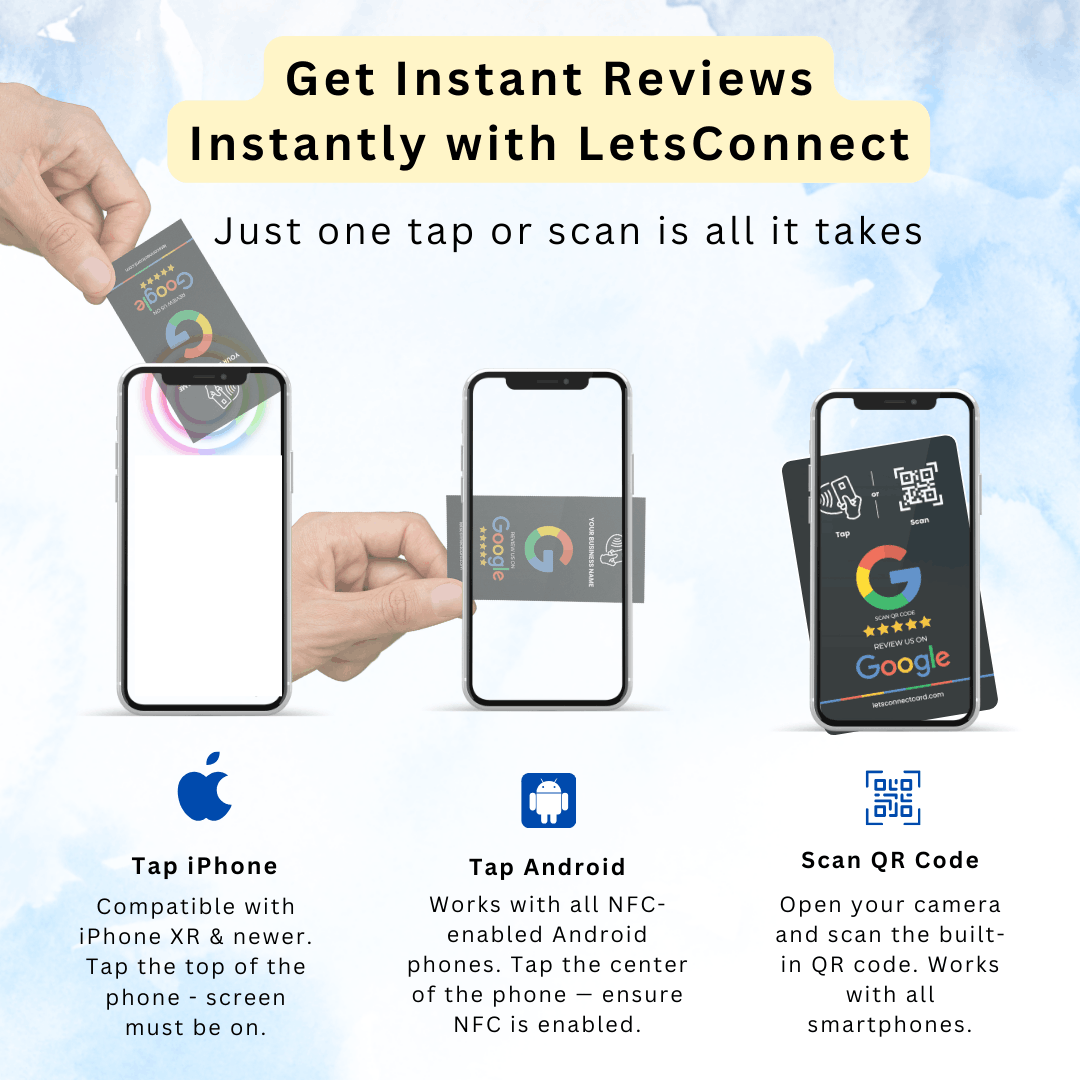
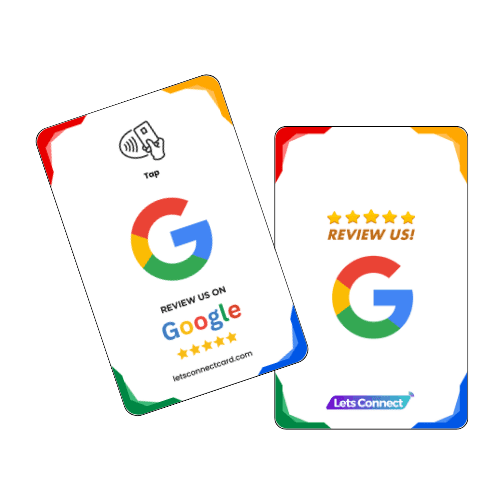
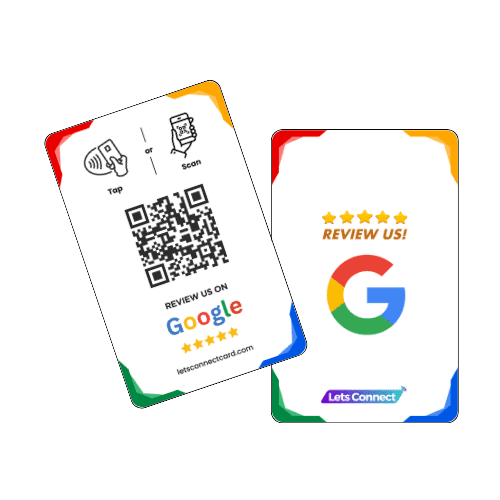
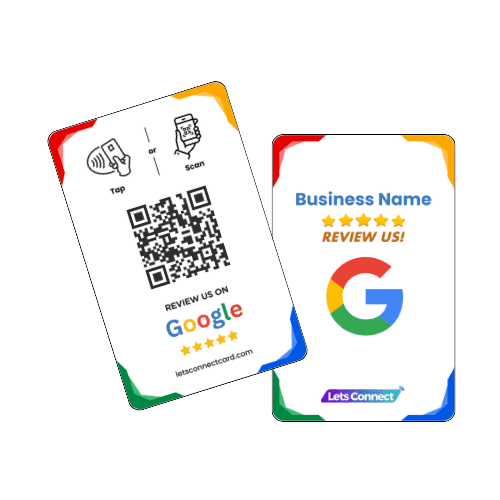
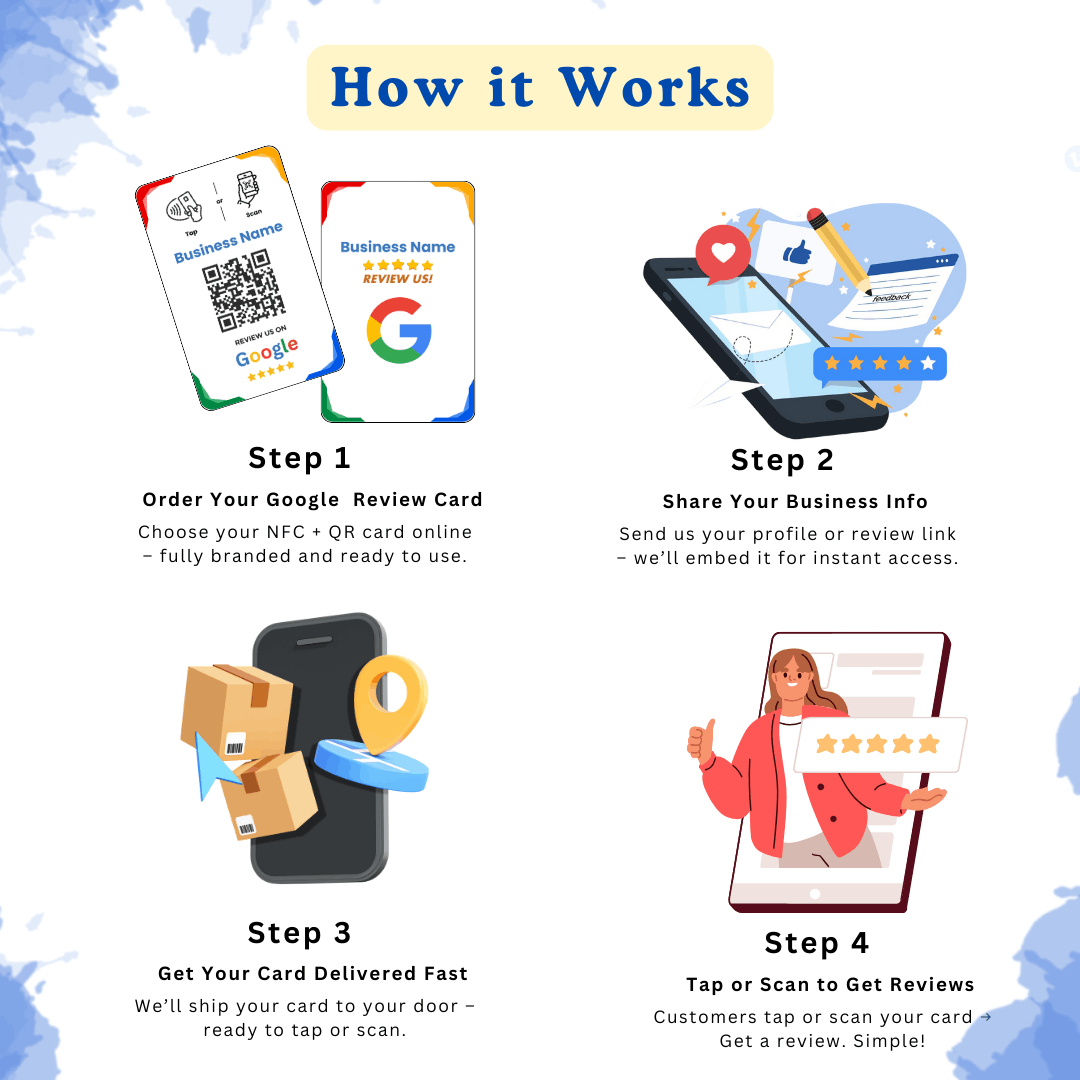
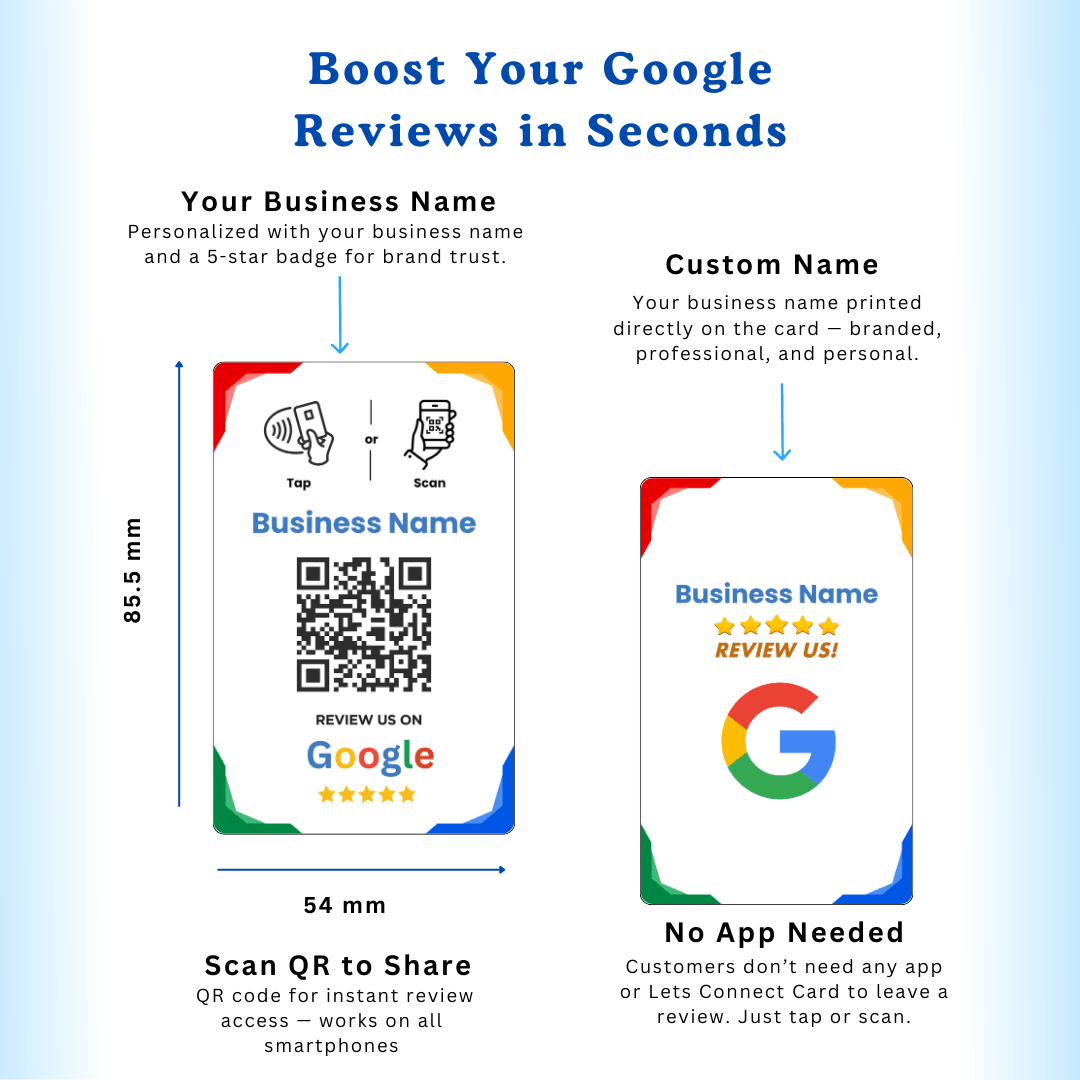
It is a credit-card-sized piece of PVC with a passive Near-Field Communication chip embedded inside it and a printed QR code on the reverse as a fallback. The chip has no battery and nothing to charge; it only wakes for a few milliseconds when a powered phone is held within a few centimetres of it. The phone reads a URL off the chip and asks the operating system to open it. We program that URL to point at your Google Business Profile's write-a-review endpoint, so the customer lands on Google's own review screen.
What it is not: it is not a review-management platform, it is not a subscription, and it is not a way around Google's rules. The card is deliberately just a link. It captures no personal data, contains no tracking, and cannot see or filter what a customer writes.
Specification
| Card body | 600gsm PVC, credit-card size (85.6 × 54mm) |
|---|---|
| Chip | Passive NFC (NTAG-series), no battery, no expiry date |
| Read range | Roughly 1-4cm — the phone must be held against the card |
| Fallback | Printed QR code on the reverse for phones without NFC enabled |
| Destination | Your Google Business Profile review link (g.page/r/<id>/review) |
| Setup | Pre-programmed before dispatch — nothing to install or configure |
| Data captured | None. The card stores a URL and nothing else |
| Ongoing cost | None. There is no subscription attached to the card |
Setting it up
Send us the Google review link from your Google Business Profile (Profile → Ask for reviews → copy link) when you order, and the card arrives programmed. If you would rather do it yourself, the chip is rewritable with any free NFC writer app on Android or iPhone. Nothing on the card is tied to a device, an account or a login, so a card can be handed between staff or moved between counters freely.
How to use it without breaking Google's review policy
Google's policy on user-contributed content sets out clear limits, and the card is built to sit inside them — but how your team uses it matters more than the hardware:
- Invite every customer, not only the happy ones. Filtering who gets asked (review gating) breaks Google's policy. Every tap goes to the same unfiltered public review page, so someone who wants to leave two stars can do so just as easily.
- Never offer anything in exchange for a review. No discounts, free drinks, prize draws or loyalty points — not for a review, and not for a positive one.
- The customer chooses their own rating and writes their own words. You can ask them to mention what they had; you cannot suggest a star rating or write the review for them.
- Only ask people who were actually customers. The card is for handing over at the point of service, not for bulk distribution to strangers.
The same principles underpin the UK's DMCC Act 2024 rules on fake and incentivised reviews and the US Federal Trade Commission's 2024 rule on consumer reviews, so a card used this way travels between markets without changing anything.
When this is the wrong product for you
Skip it if your business has no physical customer touchpoint — a purely online store has nowhere to hand a card over. Fix a suspended Google Business Profile before ordering, otherwise taps will land on a page that no longer exists. And if your current rating reflects a service problem, address that first: a card only makes it easier for customers to say what they already think.
What the card can and cannot influence
The card removes the friction between "I'd happily review this" and a published review — the customer is still in front of you, on their own phone, with your review page already open. What it cannot do is decide the rating, assurance a volume of reviews, or move your position in Google Maps by itself. Ratings, review text and rankings are all Google's to determine, and anyone promising a specific uplift is guessing.