The Best Time to Ask for a Google Review (By Business Type)
Key facts
- In person
- Ask at the natural end point: payment, handover or the final check
- Follow-up message
- Same day for simple services; a few days to two weeks for results that take time
- Research
- Next-day reminders lowered review posting; 13-day reminders raised it (Journal of Marketing, 2023)
- Google suggests
- Receipts, thank-you emails, the end of a chat, a printed QR code in store
- Never
- Pressure customers on the premises, offer incentives or ask only happy customers
Ask at the natural end of the visit, keep it an invitation, and time any follow-up message to how long the customer needs to judge the result. Here is how that plays out for shops, services, trades and clinics.
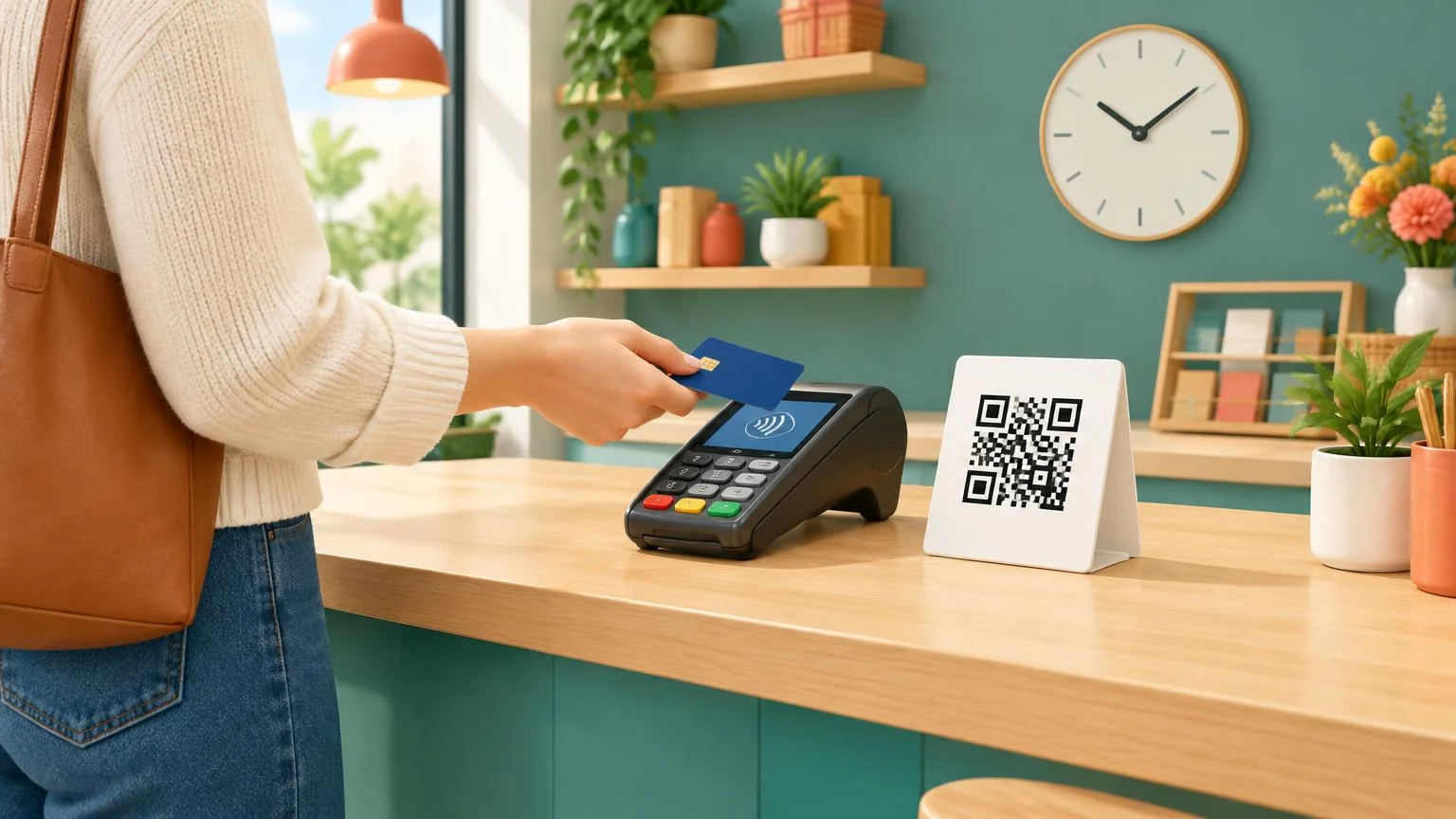
The best time to ask for a Google review is at the natural end of the visit, when the service is finished, the customer is satisfied and they are still with you. If you follow up by text or email instead, give the customer enough time to judge the result first: the same day for a haircut or a meal, a week or more for a renovation or a product they have to use. Below is a practical guide for both.
Why does timing matter when you ask for a Google review?
Timing decides whether a customer acts on your request or forgets it. Google's own guidance on getting reviews focuses on making the ask easy: share a link or QR code, remind customers, and reply to what they write. Google suggests putting the link on receipts, in thank-you emails, at the end of a chat conversation and on a printed QR code in your store, which are all moments close to the end of the transaction.
Research adds a twist for follow-up messages. A 2023 study in the Journal of Marketing, based on two field experiments with more than 300,000 consumers on South Korean travel and fashion marketplaces, found that reminders sent the next day lowered the likelihood of a review, while reminders sent about 13 days later raised it. The authors explain the result with two forces pulling in opposite directions: an immediate reminder can feel pushy and trigger resistance, while a very late reminder arrives after the memory of the experience has faded. The sweet spot sits between the two, and it depends on how long the customer needs to form an opinion.
The same study draws a line between simple purchases, where the customer knows straight away whether they are happy, and experiences such as travel, restaurants and salons, where a short wait before the reminder produced more reviews. That distinction is the basis for the timings in this guide.
When is the best time to ask for a Google review in person?
Ask when the service is complete and the customer has just seen the result. That is the mirror check at the salon, the handover of keys at the garage, the walk-through at the end of a cleaning job, or the moment a customer pays and thanks you at the counter. The experience is fresh, the customer is standing in front of you, and a card or stand lets them act in seconds rather than later.
Finish the job and check the customer is happy with the result. If they are not, fix the problem first and skip the ask.
If they say something positive, use it as the cue: thank them and mention that a short Google review would help other people find you.
Offer the easy route: a Google review stand on the counter or a card they can tap, so the review form opens on their own phone.
Make clear there is no obligation and no need to do it now. Many customers prefer to write it later, so the link should also be on the receipt or in a follow-up message.
Ask every customer the same way. Do not pick and choose based on the rating you expect.
Google's Maps user-contributed content policy says businesses must not require or pressure users to leave ratings or write reviews while on the premises. An invitation at the counter is fine; standing over someone while they type is not. Let the customer decide when and whether to write.
If your team does the asking, give them two or three natural phrases rather than a script. Our guides on asking customers for Google reviews naturally and training staff to ask ethically cover the wording.
When should you send a review request by text or email?
Send it once the customer has had enough time to judge the result, which is usually sooner than you fear and later than an automated system defaults to. For a meal, a haircut or a single repair, the same evening or the next morning is reasonable, because the customer already knows how they feel. For work whose outcome takes time to show, such as a treatment plan, a garden, a new boiler or a product that needs a few uses, waiting a week or two tends to produce more considered reviews and fewer unanswered messages.
| Business type | Best in-person moment | Follow-up message |
|---|---|---|
| Cafés, restaurants, bars | When the bill is settled or the customer thanks you on the way out | Same evening or next morning |
| Salons, barbers, beauty | At the mirror check or when paying | Next day, once they have styled it themselves |
| Trades and home services | At the final walk-through, before the invoice | Three to seven days after the job |
| Dental, clinics, physio | At reception after the appointment | A few days later; longer after a course of treatment |
| Retail and showrooms | At the till, with a stand or card by the terminal | A few days after collection or delivery |
| Accountants, solicitors, agents | When the matter completes or the keys are handed over | One to two weeks after completion |
| Online orders | Not applicable | After delivery plus the time it takes to use the product |
Whatever the channel, the message should contain the direct link to your review form so the customer does not have to search for you. If you have not copied it yet, see how to find your Google review link. Ready-made wording for text, email and WhatsApp is in our review request templates.
What is the worst time to ask for a Google review?
The worst time is before the customer has seen the result, or when the request arrives alongside something unwelcome. A few moments reliably work against you:
- Before the job is finished. The customer cannot judge the work yet, and a request at that point feels like pressure.
- Attached to the invoice. The customer is thinking about the cost, not the service, and the two messages compete for attention.
- While the customer is busy or distracted, such as managing children, taking a call or rushing to leave. They will mean to do it later and forget.
- Weeks after a one-off visit, when the details have faded and the review, if it comes, is vague.
- When something has gone wrong. Fix the problem first. Asking for a review in that moment invites a bad one, but quietly skipping unhappy customers as a policy is review gating, which Google prohibits.
Does the time of day or day of the week matter?
Less than the moment in the customer journey does. Several review platforms publish their own figures suggesting morning or mid-week emails get slightly more responses, but these come from the vendors' own data without published methods, so treat them as a hint rather than a rule. What is clearly sensible: send during waking hours in the customer's time zone, avoid late-night texts, and do not send more than one polite reminder. Then watch your own numbers for a month and adjust.
For most local businesses the bigger wins are simpler: ask every customer, ask at the right moment, and make the review form one tap away. Our guide to getting more Google reviews covers the rest of the routine.
How do you make the right moment easy to act on?
A good moment is wasted if the customer then has to search for your business and find the review button. Put the link where the moment happens. At a counter, that is a stand or plaque next to the card terminal. For mobile trades, it is an NFC review card the technician can hold out at the walk-through: the customer taps it with their phone and the review form opens, with a printed QR code as the backup. For online or phone-based work, it is the link in the follow-up message.
The customer still chooses their own rating and writes their own words. The card or stand only removes the search step, which is often the reason customers who meant to review never do.
What rules apply whenever you ask?
Timing changes how many reviews you get; the rules do not change with the timing. Under Google's policies you may ask any customer for a review and share a link or QR code, but you may not:
- Offer incentives such as payment, discounts, free goods or services in exchange for a review. Google's help page calls this strictly prohibited.
- Discourage or prohibit negative reviews, or selectively solicit positive reviews from customers.
- Require or pressure customers to leave a rating or write a review while on the premises.
- Post reviews yourself, through staff or family, or buy them.
Our summary of Google's review policy for businesses goes through each point. Consumer law in many countries also prohibits fake and incentivised reviews, so the same habits keep you on the right side of both.
This article is general guidance, not legal advice. Check the current Google Business Profile help pages and your local consumer protection rules before setting a review request policy.
❓ Frequently asked questions
Should I ask for a Google review immediately after the sale?
In person, yes: the end of the visit is the best moment, as long as it is an invitation rather than pressure. For automated texts or emails, research found next-day reminders reduced review posting, so give the customer time to judge the result first.
How long should I wait before sending a review request email?
Same day or next morning for simple services such as a meal or a haircut. For work that takes time to assess, such as a renovation, a treatment plan or a product that needs a few uses, wait a week or two.
Is it okay to ask for a Google review twice?
One polite reminder is reasonable if the customer did not respond. Repeated requests can feel like pressure, and Google's policy prohibits pressuring customers into leaving reviews.
Can I ask for a review while the customer is still in the shop?
Yes, you can invite them and offer a card, stand or QR code. Google's policy prohibits requiring or pressuring customers to write a review while on the premises, so make clear they can do it later and there is no obligation.
Should I only ask customers who seem happy?
No. Selectively soliciting positive reviews is review gating, which Google's content policy prohibits. Ask every customer the same way, and deal with problems directly rather than by filtering who you ask.
Sources
- Google Business Profile Help: Get reviews on Google
- Google Business Profile Help: Create a link or QR code to request reviews
- Google Maps user-contributed content policy: Prohibited and restricted content
- American Marketing Association: Ask for Customer Reviews at the Right Time (Journal of Marketing, 2023)
- Baylor Keller Center: Wait Just a Minute: When to Ask for Online Reviews
- University of Nottingham Ningbo China: When Is the Best Time to Ask Customers for a Review? (Harvard Business Review, 2023)
Related articles
How to Ask Customers for Google Reviews Naturally
No pressure and no awkwardness — simple, honest ways to ask every customer for a Google review that feel like an invitation, not a demand.
Google Review Request Templates for Text, Email and WhatsApp
Ready-to-use Google review request templates for SMS, email, WhatsApp and the counter, with the wording rules that keep every message inside Google's policy and US messaging law.
How to Train Your Staff to Ask for Google Reviews
Your team is often best placed to ask for reviews, as long as they know how to do it naturally and within Google's rules. A simple training framework and phrases staff can adapt.