Hotels improve their Google rating by fixing the issues guests complain about, asking every guest for a review at natural moments in the stay, and replying to reviews promptly and specifically. Guests often check Google reviews alongside travel sites before they book, so your rating and your replies both shape the decision.
Google says local results are based mainly on relevance, distance and prominence, and that more reviews and positive ratings can help a business's local ranking. There's no way to pay for a better position, so the work is operational: better stays, and a consistent way of asking for feedback.
Where Do Hotels Typically Lose Rating Points?
Most negative hotel reviews trace back to a handful of moments where expectations and reality don't match. Read your own reviews and tag each complaint so you can see which ones repeat.
- Check-in: waits at busy times, or rooms not ready when the guest arrives
- Wi-Fi: slow connections, confusing logins or charges for something guests assumed was free
- Breakfast and coffee: items running out, or service ending earlier than guests expected
- Cleanliness and maintenance: small things like hair in the bathroom, a broken lamp or a noisy AC unit
- Information: staff unsure about parking, shuttles, or local recommendations
- Billing: unexpected resort fees, parking charges or deposit holds not explained at check-in
Fixing the most frequent complaint usually does more for your rating than any review-collection tactic, because it changes what future guests write.
When Should a Hotel Ask Guests for a Review?
Ask at moments when the guest has experienced the stay and has a minute: around check-out, at the restaurant or bar, and in a follow-up message after they leave. Use the same request for every guest.
Check-in: a review card with the room key, mentioned briefly rather than pushed
Room: a review sticker or card on the desk with a neutral line such as "Tell us about your stay on Google"
Restaurant or bar: a review stand at the host station, or a card in the check presenter
Check-out: front desk offers a card with the receipt: "If you have a minute, we'd appreciate a Google review"
After the stay: a follow-up email with your review link, sent to every guest the same way
Before sending post-stay emails or texts, check the consent rules for marketing messages that apply to you, and make sure the request goes to every guest, not only those who rated the stay highly in an internal survey.
| Touchpoint | Suitable format | Example wording |
|---|---|---|
| Front desk | Counter review stand | "Tap or scan to review your stay" |
| Guest room | Review sticker or card on the desk | "Tell us about your stay on Google" |
| Restaurant or bar | Card in the check presenter | "We'd love your honest feedback" |
| Spa or pool desk | Counter stand or card | "How did we do today?" |
| Lobby wall | Wall plaque | "Review us on Google" |
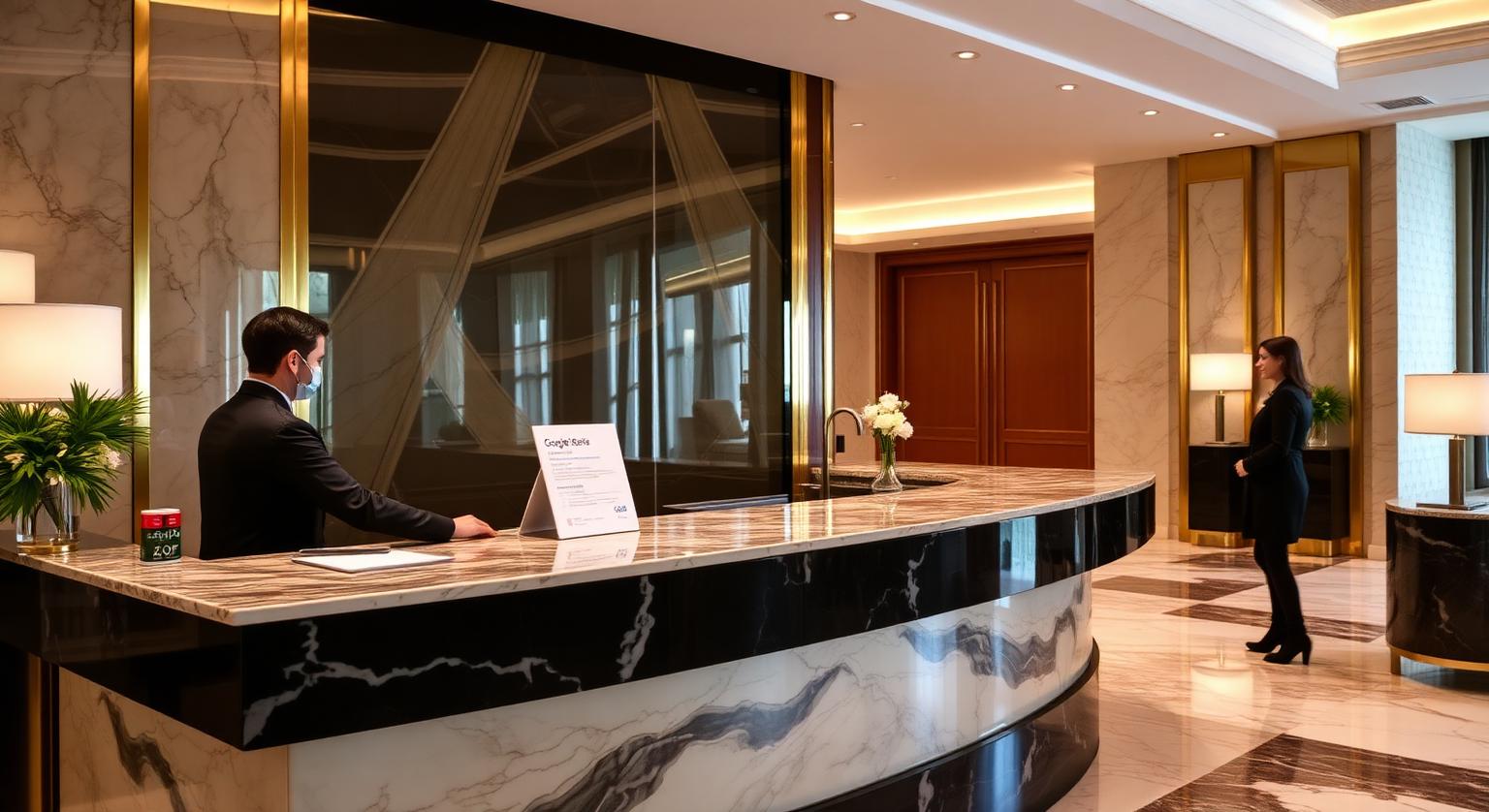
A Google review stand suits the front desk, while waterproof Google review stickers work for desks, pool areas and room-service menus. Each one opens your Google review page with a tap or a scan.
How Should Hotel Staff Ask?
Use one short, neutral line with every guest, and never tie it to a reward. Offering a free breakfast, an upgrade or a discount in exchange for a review breaks Google's policy on incentives.
- "Thanks for staying with us. If you have a minute, an honest Google review really helps."
- "You can tap your phone on this card or scan the code. It opens our Google review page."
- Avoid "If you had a five-star stay, please review us"; it only invites positive reviews
- Don't ask staff, owners or their families to review the hotel; Google treats that as a conflict of interest
How Should a Hotel Reply to Reviews?
Reply promptly, sign with a real name and role, and address the specific point the guest raised. Google notifies the reviewer when you reply, and future guests read your replies as a sign of how you treat people.
- Reply to every review, signed by name ("Sarah, General Manager")
- For negative reviews, name the issue and the fix: "You waited too long to check in on Friday. We've added staff at the desk on weekend afternoons."
- Move details offline: give a direct email or phone number rather than discussing bookings or charges publicly
- Thank positive reviewers and mention the team member they praised; it's good for morale and shows the review was read
- Don't argue, and never share a guest's booking details in a public reply
For reply wording you can adapt, see how to turn negative reviews into conversions.
How Do You Turn Reviews Into Operational Fixes?
Treat reviews as free guest research. A short monthly review of themes tells you where to spend effort.
Export or list the month's reviews and tag each with a theme (check-in, cleanliness, breakfast, noise, staff)
Count which themes appear most often in negative and mixed reviews
Pick one fix per month and assign an owner
Brief the team on what changed and why
Watch whether later reviews mention the issue less
❓ Frequently asked questions
How many reviews does a hotel need to outrank competitors on Google?
There's no fixed number. Google says rankings are based mainly on relevance, distance and prominence, and that more reviews and positive ratings can help, but it doesn't publish a target.
Are NFC review cards practical for hotels?
Yes. Cards, stands and stickers can be placed at the front desk, restaurant, rooms and spa, and each opens the same Google review page with a tap or a scan.
Can a hotel offer a free drink or upgrade for a review?
No. Google's policy prohibits incentives such as payment, discounts or free goods or services in exchange for a review.
Should hotels reply to every review?
It's good practice. Google says replying shows that you value guests' feedback, and future guests read replies when deciding where to stay.
Can a hotel remove an unfair negative review?
Only if it breaks Google's content policies, such as spam or off-topic content. Report it through your Business Profile, and reply professionally in the meantime.
Can hotels ask guests for reviews at checkout?
Yes. Checkout is a natural moment because the guest has experienced the full stay. Ask every guest in the same friendly way.
How quickly can a hotel improve its Google rating?
It depends on how many guests you have and what they experience. A steady flow of new, genuine reviews and fixing recurring issues is what moves the rating over time.
Can we offer a room upgrade in exchange for a review?
No. Google's policy prohibits offering incentives such as upgrades, discounts or free services in exchange for reviews.
Related Guides & Tools
Hand-picked next reads for US small businesses growing their Google reviews.
Explore Our Products
Google Review Card
NFC tap cards that take customers straight to your Google review page.
Google Review Stand
Countertop stands perfect for restaurants, salons, and reception desks.
Google Review Plaque
Wall-mounted plaques that collect reviews in high-traffic areas.
Google Review Stickers
Peel-and-stick NFC stickers for windows, doors, and counters.
Google Review Keychains
Portable keychains your team can carry to collect reviews anywhere.
NFC Wristband
Wearable NFC wristbands for events, trade shows, and on-the-go reviews.
Related articles
Top 10 Google Review Strategies for Small Businesses
Ten practical, policy-compliant ways for small businesses to get more Google reviews: make reviewing easy, ask at the right moment, reply to reviews and keep it consistent.
The ROI of Improving Google Reviews for Local Businesses
Google reviews can affect how visible and trustworthy your business looks in local search. How reviews connect to revenue, what Google actually says, and how to measure the return for your own business.