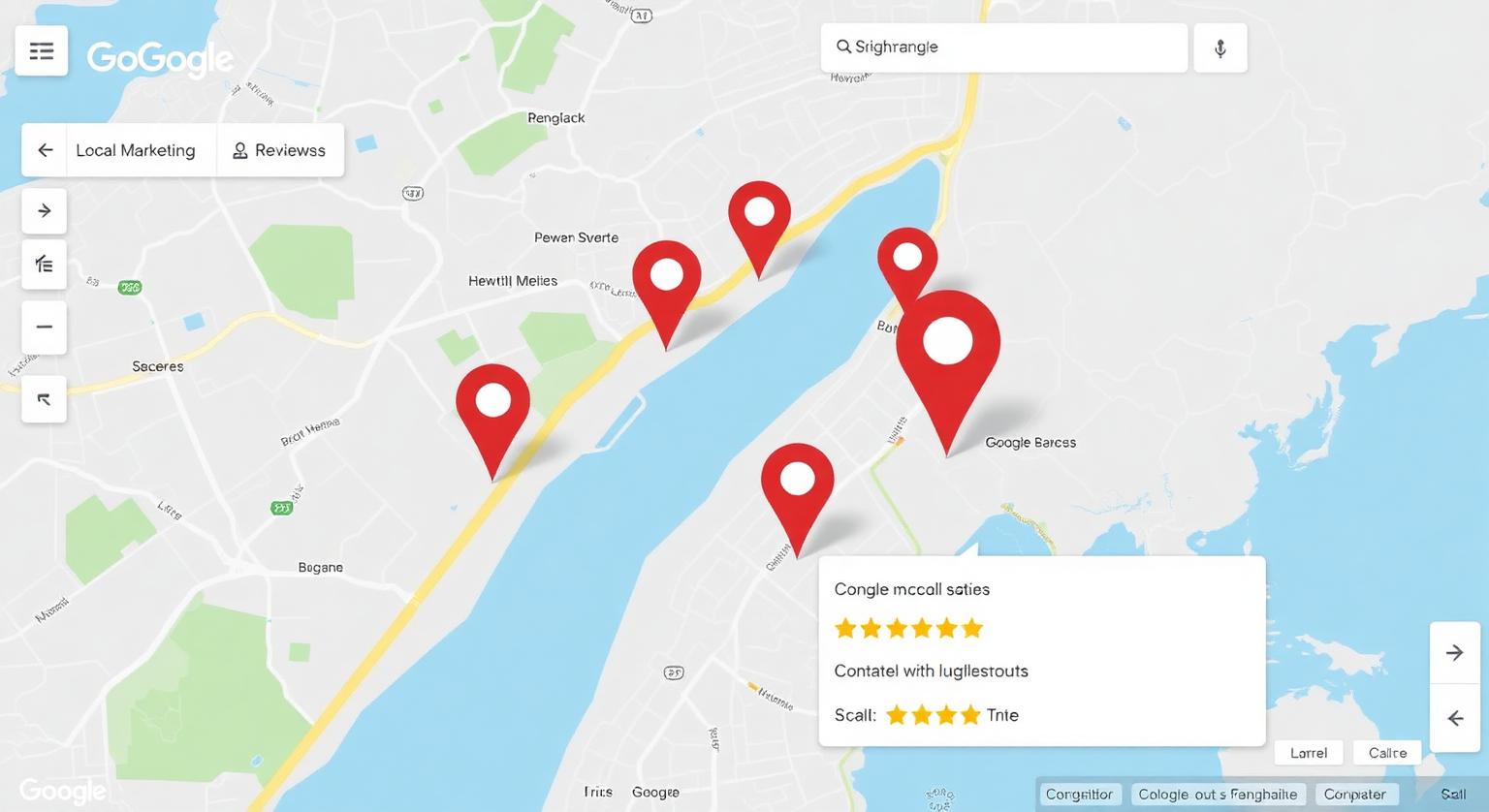
For UK high-street businesses, Google Reviews do two jobs at once: they are one of the inputs Google uses for local ranking, and they are often the first thing a customer reads before choosing you. Whether you run a barbershop in Manchester, a gastropub in Bristol or a family dentist in Edinburgh, your review profile is one of the few local SEO signals you can influence directly, simply by asking customers in the right way.
Why Google Reviews Matter for UK Local SEO
Google says local results are based mainly on three things: relevance, distance and prominence. Its own Business Profile help page states that "more reviews and positive ratings can help your business's local ranking", which places reviews within prominence: how well known and trusted your business appears.
Reviews also help the human side of the search. When someone in Birmingham searches "boiler repair near me", they scan your star rating, how recent your reviews look and what people actually say. Reviews that mention the job done ("fixed our combi boiler the same day") help a stranger decide quickly whether you are the right fit, even though Google doesn't publish how much weight it gives to review text.
What Google Actually Says About Reviews and Ranking
- Relevance, distance and prominence are the main factors Google names for local results
- More reviews and positive ratings can help local ranking, according to Google
- Replying to reviews "shows that you value their feedback" — Google presents it as good customer care, not a ranking switch
- There's no way to request or pay for a better local ranking on Google
- Distance is outside your control, so a complete, accurate Business Profile and a steady flow of genuine reviews are where your effort pays off
Quick test: search your category plus town in a private browser window (e.g. "orthodontist Reading") and read the top results as a customer would. Note what their reviews mention, how recent they look and whether the owner replies. That tells you more about what customers expect locally than any rule of thumb.
What This Looks Like for Real UK Businesses
Take a dental practice that currently emails a review link a day after each appointment. Most patients never open it. If the receptionist instead mentions reviews as the patient pays and offers a tap-to-review card at the desk, the request arrives while the visit is still fresh and the patient has their phone in hand. Nothing about this guarantees a ranking change, but it makes it easier for satisfied patients to leave genuine feedback that future patients will read.
How to Build a UK Review Strategy That Lasts
- Make asking routine — ask every customer, not just the ones you think are happy
- Ask at the moment of payment or when the job is finished, while the experience is fresh
- Remove friction with your direct Google review link, a QR code or an NFC review card at the till
- Give staff a short, relaxed line such as "Would you mind leaving us a quick review?"
- Reply to reviews regularly, including the 3- and 4-star ones, with specific, polite responses
- Never offer discounts, freebies or prize draws for reviews — this breaks Google's policy and can fall foul of the DMCC Act 2024
Common Mistakes That Hold UK Profiles Back
- Buying reviews or posting them for yourself — fake reviews are a banned practice under the DMCC Act 2024, enforced by the CMA
- Asking staff, family or friends to review the business — Google treats this as conflict-of-interest content
- Only sending the link to customers you expect to be happy — Google prohibits selectively soliciting positive reviews
- Ignoring negative reviews instead of responding calmly and professionally
- Leaving the Business Profile half-finished — wrong hours, missing categories and no photos undermine relevance whatever your reviews say
The UK Legal Backdrop
Since 6 April 2025, the Digital Markets, Competition and Consumers Act 2024 has made fake reviews, concealed incentivised reviews and misleading presentation of reviews banned practices in the UK. The CMA enforces it and can fine up to 10% of global turnover, and its guidance (CMA208) sets out what businesses should do. Our plain-English guide to the DMCC Act review rules covers this in more detail.
The Bottom Line for UK Small Businesses
Reviews won't override distance or a poorly matched profile, and nobody can promise a set ranking gain. What you can control is a complete Business Profile, a consistent habit of asking every customer, and thoughtful replies. Keep it inside Google's rules and UK law, and your reviews will keep working for you with both Google and the people reading them.
❓ Frequently asked questions
How many Google reviews do UK businesses need to rank in the Map Pack?
Google doesn't publish a number. It says more reviews and positive ratings can help local ranking, alongside relevance and distance, so aim for a steady flow of genuine reviews rather than a target count.
Do Facebook or Yell reviews help my Google ranking?
Google doesn't say how, or whether, reviews on other sites affect local ranking. They can still help customers who check several sources, so it's worth keeping those profiles accurate too.
Can I offer a discount for a Google review in the UK?
No. Google's policy prohibits incentives for reviews, and concealed incentivised reviews are a banned practice under the DMCC Act 2024, enforced by the CMA.
How quickly will new reviews affect my local SEO?
There's no fixed timescale, and Google doesn't publish one. Reviews are one prominence signal among several, so focus on asking consistently and keeping your profile complete.
Do reviews really affect Google rankings?
Google says more reviews and positive ratings can help a business's local ranking. It also names relevance and distance as main factors, so reviews help but don't decide ranking on their own.
How many reviews do I need to rank in the Map Pack?
Google doesn't publish a number. It depends on your competitors, your category and where the searcher is, so focus on steady, genuine reviews rather than a target count.
Does replying to reviews help SEO?
Google says replying shows that you value customers' feedback. It doesn't state that replies are a ranking factor, but they help future customers judge you.
Can I pay to rank higher in local results?
No. Google states there's no way to request or pay for a better local ranking; ads are shown separately and labelled.
Related Guides & Tools
Hand-picked next reads for UK small businesses growing their Google reviews.
Explore Our Products
Google Review Card
NFC tap cards that take customers straight to your Google review page.
Google Review Stand
Countertop stands perfect for restaurants, salons, and reception desks.
Google Review Plaque
Wall-mounted plaques that collect reviews in high-traffic areas.
Google Review Stickers
Peel-and-stick NFC stickers for windows, doors, and counters.
Google Review Keychains
Portable keychains your team can carry to collect reviews anywhere.
NFC Wristband
Wearable NFC wristbands for events, trade shows, and on-the-go reviews.
Related articles
MUVERA and Google Reviews: What It Is and What Still Matters
MUVERA is a Google Research retrieval method, not a confirmed ranking update. Here is what it is, and the review practices Google does document for local search.
How Google Reviews Influence Map Pack Rankings
The Map Pack is where many local customers choose a business. Here's what Google says about how reviews fit into local ranking — and what it doesn't say.