NFC Review Cards vs QR Review Cards – Which Gets More Reviews?
Key facts
- Question answered
- NFC tap versus a printed QR code
- NFC
- Tap the phone to the card; no camera needed
- QR
- Works on any phone with a camera
- Our products
- Include both on most options
- Same destination
- Your Google review page
We analysed real conversion data from thousands of businesses. The results are decisive — but the smartest approach might surprise you.
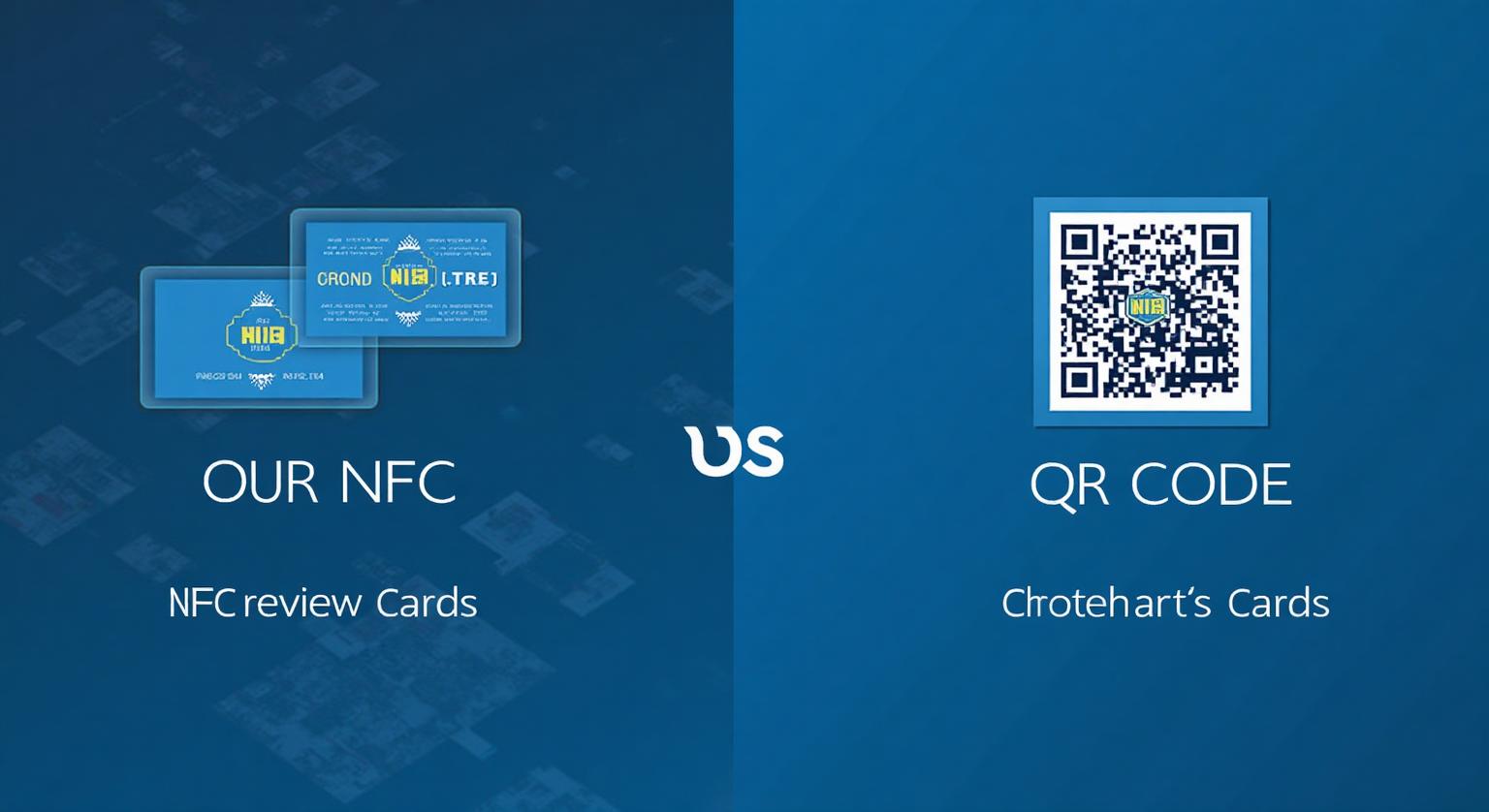
Across UK high streets in 2026, the debate is settled: NFC Google Review Cards convert far more customers than QR review cards in face-to-face settings. But the why matters — because if you're a UK business owner choosing between the two, the wrong choice will quietly cost you a meaningful chunk of the reviews you could have earned.
Tap vs Scan — UK Conversion Data
In UK in-person settings, tapping consistently wins over scanning. A tap needs no unlocked camera app, no steady hand, and no readable light — the phone simply needs to touch the card. That single difference is why UK businesses that switch from printed QR codes to NFC cards see more of the customers they ask actually leave a review.
Why UK Customers Prefer Tapping
Contactless payment normalised the tap gesture across the UK over a decade ago. When a customer is asked to leave a review and the card is held out, the British instinct is now to tap — exactly the same motion as paying with a debit card or Apple Pay. QR codes still require unlocking the phone, opening the camera, positioning carefully, then tapping the notification. Each step is a chance to give up.
Where QR Codes Still Make Sense
- Printed receipts and invoices customers take away
- Shop window displays where the phone is held further away
- Marketing leaflets and direct mail campaigns
- Older menus where adding NFC isn't practical
Where NFC Wins Every Time in the UK
- Tills, bar tops and reception desks (cafés, pubs, salons, dentists)
- Card-machine drops at restaurant tables
- Mobile tradespeople handing a card after a job
- Taxis and private hires at the end of a journey
- Gym receptions, beauty rooms and treatment chairs
Best practice for UK businesses in 2026: NFC card at the till plus a QR fallback printed on the receipt. You catch the tap-happy customers in person and the slow finishers later.
Cost Comparison for a UK Business
A high-quality NFC Google Review Card costs under £20 and lasts indefinitely. A printed QR card costs less upfront but converts noticeably fewer of the customers asked — so per review earned, NFC works out cheaper for almost every UK business that asks a steady stream of customers each week.
❓ Frequently Asked Questions
Are NFC review cards better than QR codes in the UK?
For in-person settings, yes — NFC converts noticeably more UK customers than QR codes. For printed receipts and shop windows, QR codes are still useful as a backup.
Do UK customers know how to tap NFC cards?
Yes. Contactless payment has been mainstream in the UK since 2014, and Apple Pay/Google Pay normalised the tap gesture across all ages. Most customers tap instinctively when a card is presented.
Can I use both NFC and QR on the same review card?
Yes, and many UK businesses do. The NFC chip handles in-person taps and the printed QR catches anyone who prefers to scan or takes the card away.
Does NFC always convert better than QR?
NFC generally removes more friction because it skips the camera step, but the honest answer is that we don't have an independent, controlled study to cite an exact multiplier. What we can say is that fewer steps between intent and submission tends to mean fewer people give up along the way.
Related Guides & Tools
Hand-picked next reads for UK small businesses growing their Google reviews.
Explore Our Products
Google Review Card
NFC tap cards that take customers straight to your Google review page.
Google Review Stand
Countertop stands perfect for restaurants, salons, and reception desks.
Google Review Plaque
Wall-mounted plaques that collect reviews in high-traffic areas.
Google Review Stickers
Peel-and-stick NFC stickers for windows, doors, and counters.
Google Review Keychains
Portable keychains your team can carry to collect reviews anywhere.
NFC Wristband
Wearable NFC wristbands for events, trade shows, and on-the-go reviews.
Ready to Get More Google Reviews?
Start collecting reviews instantly with NFC Google Review Cards.
Shop NowRelated Articles
NFC Review Cards vs Printed QR Cards – Cost & Performance
QR cards look cheaper on paper. But when you factor in conversion rates, lifespan, and cost per review, the numbers tell a very different story.
Why NFC Review Cards Are the Future of Review Collection
Emails get ignored. SMS feels spammy. QR codes are fading. Here's why NFC is rapidly becoming the new default for ethical review collection.