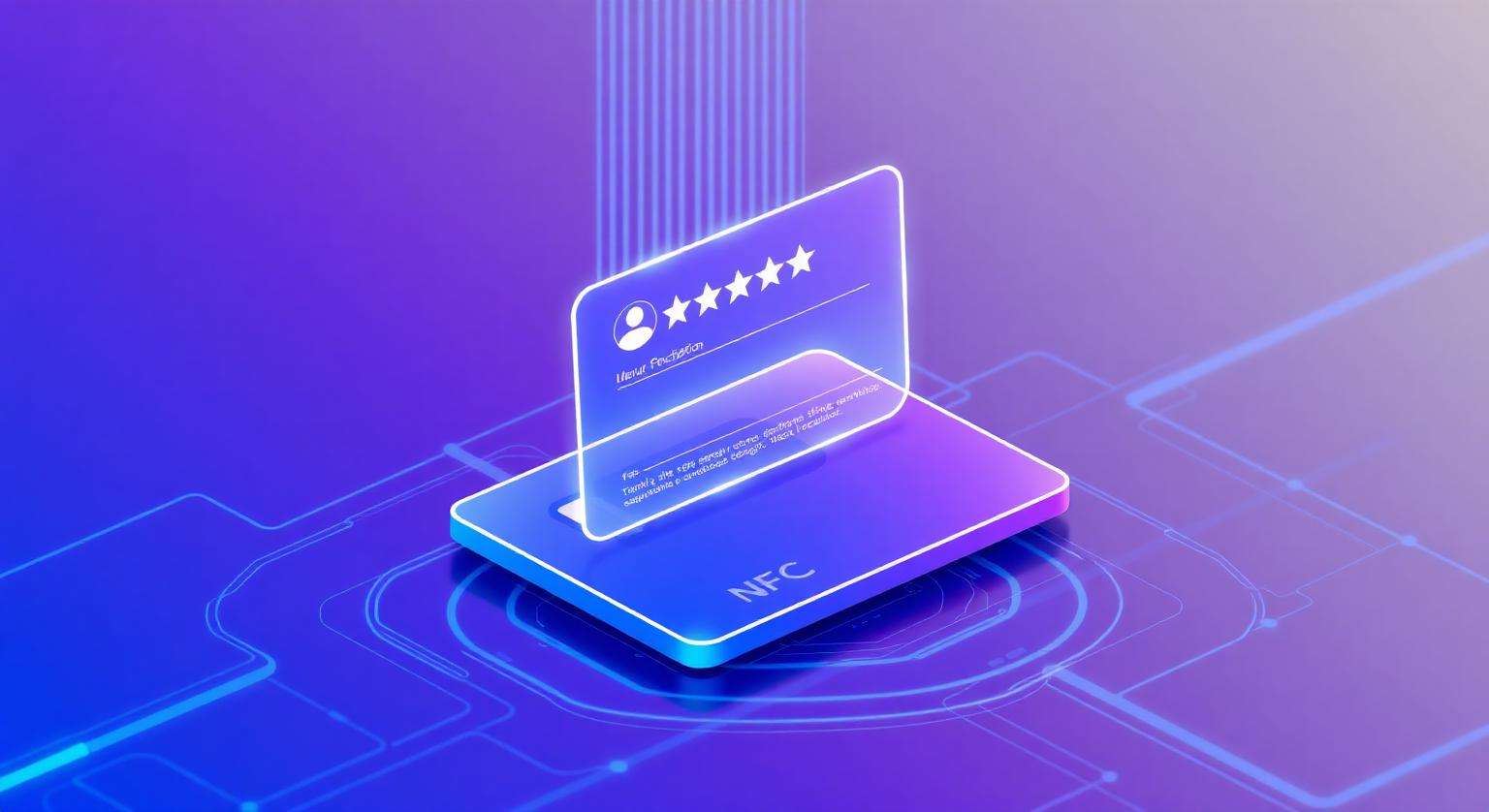
India scanned billions of QR codes during the UPI revolution — and customers are now tired of pulling out their camera app. NFC removes that step entirely. One tap, Google opens, review submitted. For Indian businesses, this is a quiet competitive edge.
India led the world in QR adoption thanks to UPI. Every shopkeeper from a Mumbai dhaba to a kirana in Indore has a QR code. But here's the irony: that QR saturation is exactly why QR no longer works for collecting reviews. Customers have QR fatigue. They open the camera, scan, and assume it's another payment prompt. NFC bypasses all of that — and that's why the smartest Indian businesses are quietly moving to NFC review cards in 2026.
The QR Problem Indian Businesses Don't Talk About
A typical Indian customer has scanned 50+ QR codes this month — almost all of them for payments. The brain now associates QR with ‘pay something’. When you put a QR code labelled ‘Scan to Review’ on your counter, the customer's instinct is to hesitate, suspicious it might charge them. In our experience, QR review conversion rates at Indian counters have been dropping year on year as customers grow warier of scanning codes for anything other than payment.
Why NFC Solves the Indian Conversion Problem
NFC is different in a way customers instinctively understand. One tap. No camera. No app. The Google review page opens automatically. There's no scanning, no decoding, no ‘is this safe?’ moment. In our experience, NFC review cards convert at a noticeably higher rate than QR codes. The customer's hand reaches for the card, taps once, and the review window opens.
NFC vs QR for Indian Smartphone Reality
There's one honest caveat for India: not every smartphone supports NFC. Tier-1 cities have stronger NFC penetration; tier-2 and tier-3 cities have less. For this reason, every smart Indian business uses NFC cards with a small QR backup printed on the same card. NFC-first design + QR fallback. Best of both worlds, zero customer lost.
Why NFC Wins for Specific Indian Business Types
- Restaurants: customers tap with one hand while holding the phone in the other — natural
- Salons: stylist taps the card while customer is still in the chair — high emotion moment
- Clinics: doctors hand the card with the prescription — zero friction
- Hotels: NFC card on the bedside table or check-in counter — works for international guests too
- Gyms and yoga studios: NFC wristbands worn during class — tap as the customer leaves
- Auto workshops: NFC card handed with the vehicle keys — peak satisfaction moment
The Cost Argument Indian Businesses Get Wrong
Indian business owners often ask ‘why pay ₹1,000 for a card when a QR poster costs ₹50?’ In practice, a tap-to-review card removes friction that a printed QR poster doesn’t, so it tends to collect noticeably more reviews from the same footfall over time.
The future of Indian review collection isn't ‘scan’ — it's ‘tap’. Businesses still using QR-only setups in 2026 will quietly be outranked by their NFC-adopting neighbours.
How to Move From QR to NFC (Indian Adoption Guide)
Order 2–3 NFC review cards with QR backup printed (covers all smartphone types)
Place one at the billing counter, one at reception, keep one as spare
Train staff with a 10-word tap script in English + Hindi/regional language
Keep your existing QR poster for one month while you transition
Measure monthly review velocity before and after so you can see the difference for yourself
Once NFC volume stabilises, retire the QR poster and reuse the wall space for a Google Review Plaque
❓ Frequently Asked Questions
Do all smartphones in India support NFC?
Not all — coverage is higher in tier-1 cities and lower in tier-2 and tier-3. That's why every reliable Indian NFC card also has a printed QR fallback on the same card. No customer is ever lost.
Does NFC work on iPhones in India?
Yes, on every iPhone from XS (2018) onwards — which covers virtually every iPhone in active use in India. iOS opens the review page automatically, no setup needed.
Will customers need to download anything to tap an NFC card?
No. NFC review cards simply open the default browser to your Google review page. No app, no permission, no signup. That's why conversion is so much higher than QR.
Is NFC safe for customers — could it steal data?
Completely safe. NFC review cards only contain a URL to your Google review page — they cannot read or transmit any data from the customer's phone. The customer's phone reads the URL, opens the browser, that's it.
How long does an NFC review card last in Indian conditions?
A quality NFC card (NTAG 215/216 chip, soft-touch finish) lasts 2+ years even with daily counter use, humidity, and monsoon. Cheap cards (₹100–₹200 range) typically fail in 2–4 months — invest in proper quality once.
Will NFC replace QR codes entirely?
Not completely — QR codes will stick around as a useful backup, especially for printed materials and older devices. But NFC is rapidly becoming the primary interaction method because it's faster, simpler, and converts significantly better.
Related Guides & Tools
Hand-picked next reads for Indian small businesses growing their Google reviews.
Explore Our Products
Google Review Card
NFC tap cards that take customers straight to your Google review page.
Google Review Stand
Countertop stands perfect for restaurants, salons, and reception desks.
Google Review Plaque
Wall-mounted plaques that collect reviews in high-traffic areas.
Google Review Stickers
Peel-and-stick NFC stickers for windows, doors, and counters.
Google Review Keychains
Portable keychains your team can carry to collect reviews anywhere.
NFC Wristband
Wearable NFC wristbands for events, trade shows, and on-the-go reviews.
Ready to Get More Google Reviews?
Start collecting reviews instantly with NFC Google Review Cards.
Shop NowRelated Articles
NFC Review Cards vs QR Review Cards – Which Gets More Reviews?
We analysed real conversion data from thousands of businesses. The results are decisive — but the smartest approach might surprise you.
Double Your Monthly Google Reviews With NFC Cards
Stuck at 5 reviews a month? NFC Google Review Cards are the single highest-leverage change you can make in your first 30 days.