Understanding the practice that can quietly destroy your Google rankings — and how to stay 100% compliant.
Many businesses unknowingly engage in review gating, believing it helps them collect more positive reviews. But after Google’s MUVERA update, review gating is considered a major violation — one that can trigger ranking drops, review removal, and even profile suspension.
This guide explains:
- What review gating is
- Why it’s dangerous
- How Google detects it
- Real consequences for local businesses
- Safe, ethical alternatives that boost reviews faster
- Tools that increase positive reviews without breaking policy
Let’s protect your business.
⭐ What Is Review Gating?
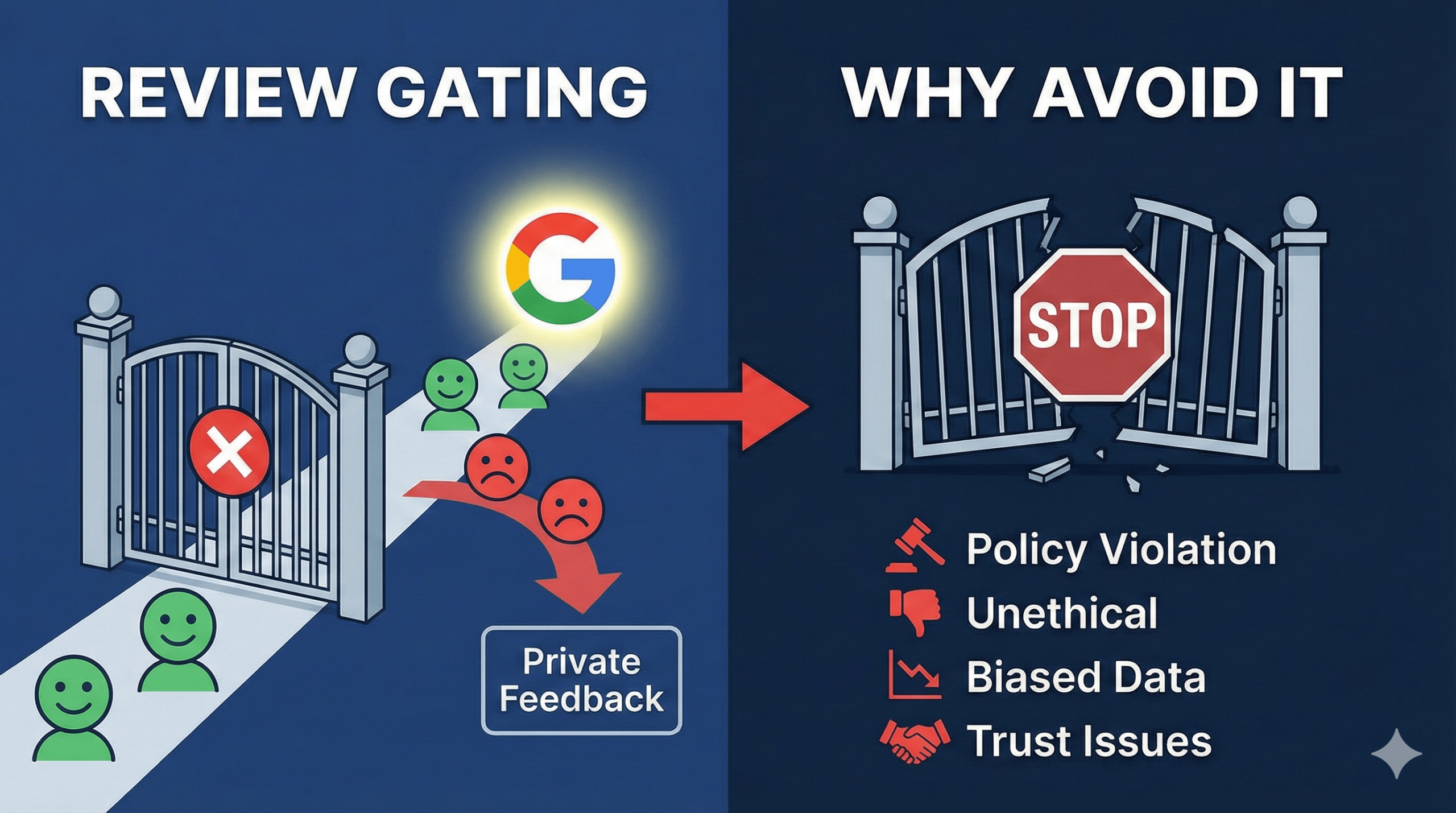
Review gating is the act of filtering customers before they leave a review.
It usually looks like this:
- “Happy or Unhappy?” buttons
- Private feedback forms that hide negative reviews
- Asking only satisfied customers for Google reviews
- Filtering who gets sent to Google vs who gets sent to a private survey
- Sending unhappy customers to a feedback form instead of Google
In simple terms:
Review gating manipulates who gets to leave a public review.
This violates Google’s core review policy.

❌ Examples of Review Gating (All Are Against Google’s Rules)
Here are common (and often unintentional) examples:
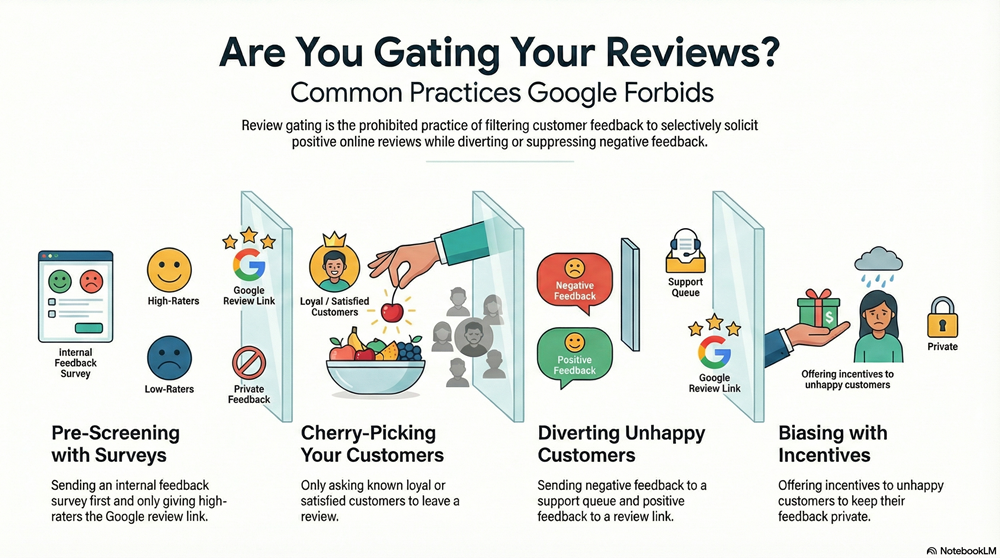
🚫 1. Sending customers a “feedback survey” BEFORE sending a Google review link
If only happy customers get the review link, that’s gating.
🚫 2. Asking only loyal or satisfied customers for reviews
“All happy customers, please review us.”
🚫 3. Avoiding review requests from customers who complained
Choosing who gets asked = gating.
🚫 4. Collecting internal ratings first (e.g., “Rate us 1–10”)
And sending the Google link only if they rate high.
🚫 5. Putting negative customers into a “support queue” and positive ones into “review flow”
This is also gating.
🚫 6. Offering incentives only to unhappy customers to keep feedback private
This biases review sentiment. All of these violate Google’s policy.
🛑 Why Google Hates Review Gating
Google’s priority is authenticity.
Gating creates a biased, manipulated review profile that:
❌ Misleads customers
❌ Inflates star ratings unnaturally
❌ Creates unfair competition
❌ Reduces trust in Google Reviews
After MUVERA, Google uses AI to track review patterns and detect bias — making gating a high-risk strategy.

⚠️ The Real Consequences of Review Gating (2025)
Businesses that get reviews:
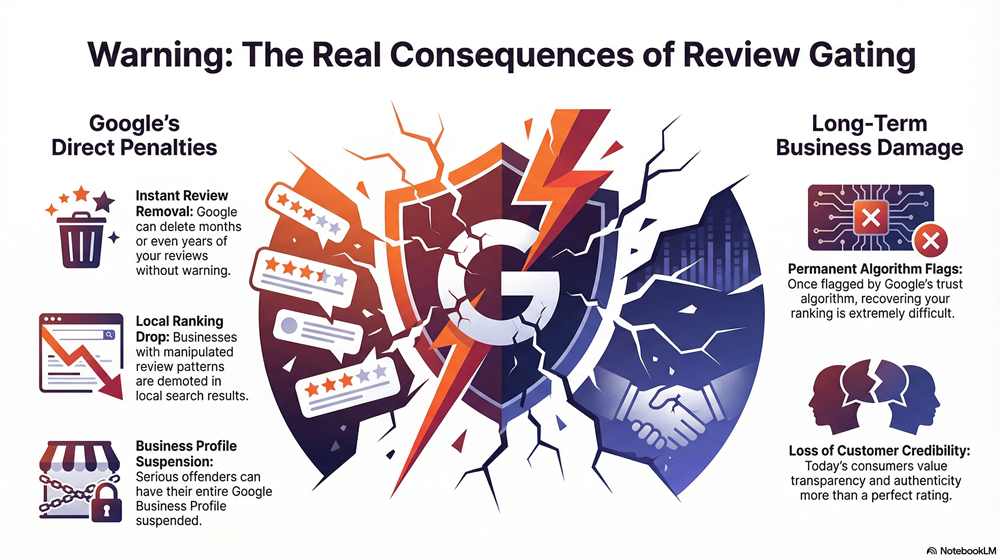
🔥 1. Review Removal
Google can delete months’ worth of reviews instantly.
🔥 2. Local Ranking Drops
Google demotes businesses with manipulated review patterns.
🔥 3. Business Profile Suspension
Serious offenders lose access to Google Business Profile.
🔥 4. Permanent Trust Algorithm Flags
Once flagged, it’s VERY hard to recover.
🔥 5. Loss of Customer Credibility
Consumers today value transparency more than perfection.
Review gating isn’t worth the risk — especially when better, safer alternatives exist.
🔍 How Google Detects Review Gating in 2025 (MUVERA Enforcement)
Google’s AI tracks:
- Sudden increases in 5-star reviews
- Drops in 1–2 star reviews
- Unnaturally high average ratings
- Repetitive phrases in reviews
- Unusual IP/geolocation patterns
- Review timing spikes
- Lack of neutral or negative reviews
- Inconsistent review velocity
- Behaviour anomalies across customer segments
This makes gating nearly impossible to hide.
💡 The Truth: You Don’t Need Review Gating to Get More Positive Reviews
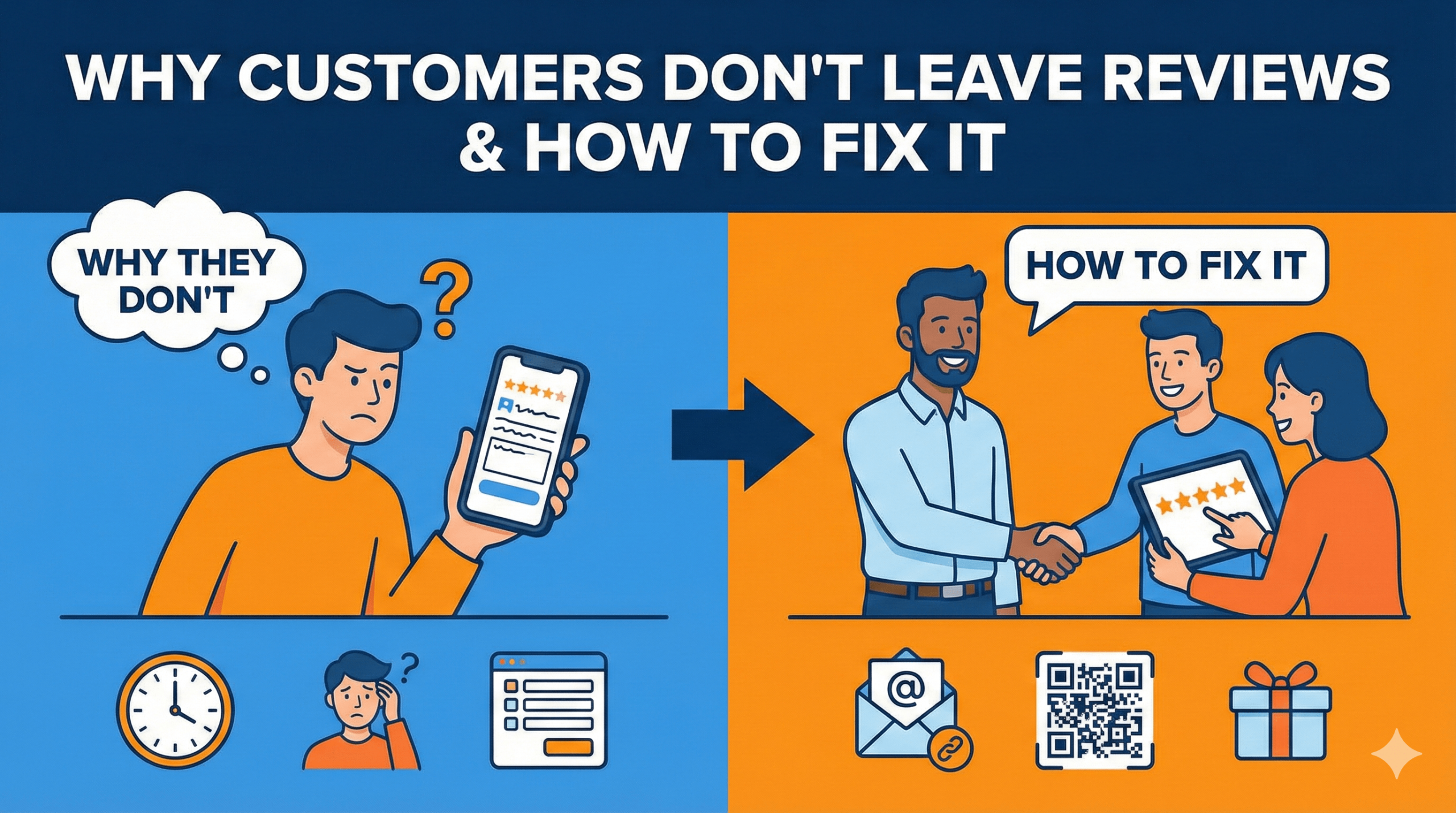
Most negative reviews happen because:
❌ It was difficult for customers to leave feedback privately
❌ It was easier to complain publicly than directly
❌ Businesses failed to ask during positive moments
❌ The review process had too much friction
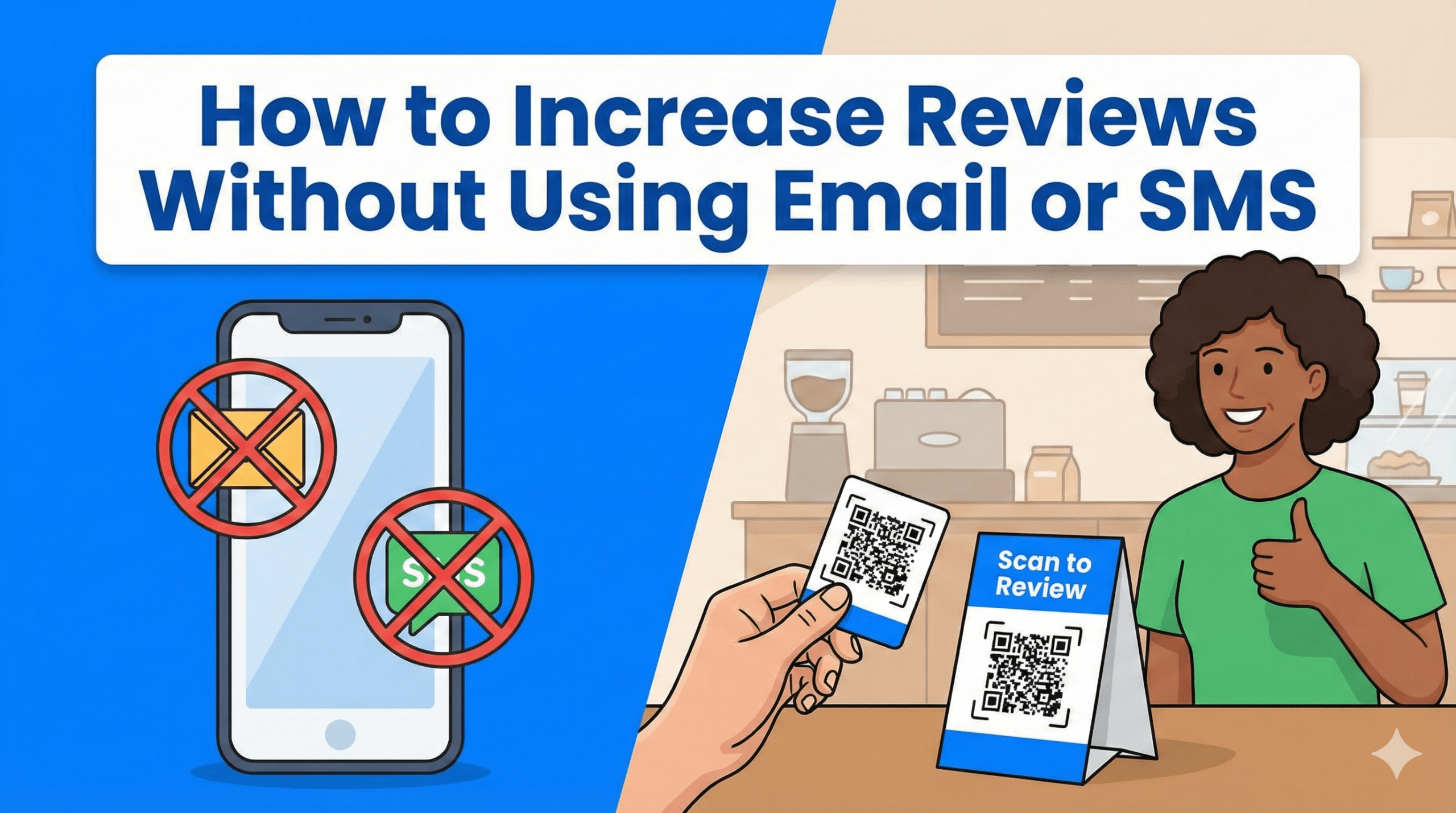
When you improve timing, convenience, and review access, positive reviews naturally outweigh negative ones. This is where NFC and QR tools dominate.
⭐ The Ethical Alternative: Remove Friction for ALL Customers
Instead of filtering customers, give all customers equal, instant access to your Google review page.
Use frictionless tools:
👉 NFC Google Review Cards
👉 Google Review Stands
👉 Google Review Stickers
👉 Smart NFC Wristband
👉 Multi Review Card
These tools:
- Don’t filter customers
- Don’t manipulate sentiment
- Don’t violate Google policy
- Increase review quantity & quality
- Significantly boost review velocity
- Improve sentiment naturally
More convenience = more reviews = more positivity.
⭐ The Psychology Behind Why Ethical Asking Works Better Than Gating
Customers prefer authenticity.
Ethical review asking triggers:
✔ Reciprocity
Good service → desire to give back.
✔ Peak-End Rule
Asking at the emotional high point → more positive sentiment.
✔ Identity Alignment
People want to support local businesses.
✔ Cognitive Ease
If tapping a card = easier than complaining, customers choose reviewing.
Ethical methods outperform gating every time.
🎯 How to Ask for Reviews Without Gating (100% MUVERA-Safe)
Here are perfect, compliant scripts:
Script 1: The Honest Ask
“If you had a good experience today, we’d really appreciate an honest review.”
Script 2: The NFC Prompt
“You can tap your phone here — it opens the review page instantly.”
Script 3: The Soft General Ask
“Your feedback helps us improve. Would you mind leaving a quick review?”
Notice:
✔ No mention of “only if happy”
✔ No filtering
✔ No incentives
✔ Full compliance
🎯 Where to Place Tools to Increase Reviews (Ethical + Effective)
✔ Checkout areas
Use a Review Stand
✔ Service handovers
Use an NFC Card
✔ Entrances & exits
Use Review Stickers
✔ Waiting areas
Use a Review Plaque
✔ Field service
Use a Smart NFC Wristband
Customers self-select the moment to review.
🧠 AEO FAQ: Review Gating (2025)
What exactly is review gating?
Filtering customers and only asking happy ones to leave reviews.
Is review gating banned by Google?
Yes — it violates Google’s review policy.
Can review gating hurt rankings?
Yes — significantly. MUVERA detects manipulation.
How do I increase positive reviews without gating?
Use NFC review tools and ethical review scripts.
Can businesses recover from gating penalties?
Yes — but it takes months of consistent, authentic review activity.
🏁 Final Thoughts: Transparency Wins in 2025
Review gating feels like a shortcut, but it is one of the fastest ways to damage your:
- Rankings
- Reputation
- Credibility
- Google Business Profile
- Customer trust
The safest and most effective alternative is simple:
👉 Ask EVERY customer
👉 Make it effortless
👉 Use frictionless NFC tools
👉 Build real, sustainable review momentum
Start building a safe, powerful, Google-compliant review engine today:
👉 NFC Google Review Cards
👉 Google Review Stands
👉 Google Review Plaque
👉 Google Review Stickers
👉 Smart NFC Wristband
👉 Multi Review Card
Ethical review generation always wins — with higher rankings, stronger trust, and lasting growth.